
Emotional safety is the confidence you feel to express yourself honestly, make mistakes, and share your thoughts without fear of judgement, humiliation, or punishment. When it exists in your relationships, workplace, and inner life, almost everything else begins to improve.
Key Takeaways
- Emotional safety is not a soft concept. Google’s four-year study identified it as the single biggest predictor of team success.
- The gap between how safe executives feel versus frontline workers is significant and worth paying attention to.
- Building emotional safety starts with consistent, small behaviours, not grand gestures.
- Men face unique cultural barriers to emotional safety, rooted in gender norms and social conditioning.
- Emotional safety directly influences physical health, sleep quality, and cognitive function.
- You can actively create emotional safety for yourself and others, starting today.
Why Emotional Safety Matters More Than You Think
There is a common misconception that emotional safety is something reserved for therapy rooms or corporate HR departments. In reality, it affects every conversation you have, every team you belong to, and every relationship you invest in.
A 2025 Gallup report found that workplaces prioritising emotional safety saw a 25% increase in employee engagement, particularly in high-stakes sectors like healthcare and technology. That is not a marginal gain. It represents real shifts in how people turn up, contribute, and stick around. Some organisations have reported up to 15% fewer resignations when leaders actively demonstrate empathy and trust.
For men specifically, this topic cuts deep. The gender norms the hidden toll on mens mental health article explores how cultural expectations around masculinity teach boys from an early age to suppress emotion rather than express it. When suppression becomes a habit, emotional safety in any environment becomes harder to recognise, let alone create.
The data from the American Psychological Association supports this: teams operating in emotionally safe environments showed 20% higher creativity and problem-solving capability in 2025. That is a measurable advantage, and it begins with one foundational question: can you be honest here without being punished for it?

The Hidden Barriers Men Face
Men in the UK face a specific set of barriers when it comes to emotional safety. The silent struggle breaking the stigma around mens mental health piece captures this well. The stigma around vulnerability means that many men learn to treat their emotional lives as liabilities rather than assets.
Understanding mens silence in relationships what it means is crucial here because silence in men is often misread as indifference, when in reality it can reflect the absence of emotional safety. If you have never been in a space where honesty was genuinely welcome, silence becomes a default protection strategy.
Social anxiety compounds this further. The social anxiety in men why it occurs and how to address it resource outlines how fear of social judgement often traces back to early experiences where vulnerability was met with ridicule. Building emotional safety, then, is not just an adult task. It involves unlearning patterns that were set years ago.
The modern mens issues we need to talk about today article notes that financial stress, identity pressure, and social isolation have all intensified in recent years, making emotional safety an even more urgent priority. When you are worried about money, the mental load narrows your capacity for emotional openness. Financial anxiety and emotional shutdown tend to feed each other.
How Emotional Safety Works in Practice
Understanding it conceptually is one thing. Knowing how it actually operates in day-to-day life is another.
In Relationships
Emotional safety in relationships means your partner, friend, or family member can share something uncomfortable and trust that you will respond with curiosity rather than criticism. It requires consistency, not perfection.
Research shows that how being a man of faith can transform your relationships often ties directly to this because faith communities can provide structured environments where vulnerability is normalised and supported, something that is rare in secular social spaces for men. Similarly, the spiritual journey of a man navigating life with faith reflects how values-based living creates a stable inner environment from which emotional safety can grow.
If you want to cultivate spiritual growth for a healthier happier mind, part of that process involves letting go of the performance-based identity that makes honest expression feel risky.
In the Workplace
The gap between how safe senior leaders feel versus frontline workers is significant. A 2025 survey found that 93% of executives feel psychologically safe at work, but only 86% of individual contributors felt the same. That gap matters enormously in practice.
Community support mental health healing through connection reinforces the point that belonging and psychological safety are deeply interlinked. When you feel part of a genuine community, rather than simply a team with shared deliverables, your willingness to speak up increases.
The importance of strong workplace community for mental health article highlights how small workplace habits, like checking in genuinely or acknowledging someone’s contribution publicly, compound into a culture of safety over time.
The Physical Cost of Emotional Unsafety
Emotional safety is not just a mental health concern. It has real, measurable consequences on your body.
How does mental health impact on physical health draws a clear line between chronic emotional stress and physical outcomes including raised cortisol, disrupted sleep, and weakened immune response. When you are in a constant state of emotional guardedness, your nervous system pays the price.
The sexual link between health and mental well being adds another dimension. Emotional safety in intimate relationships directly affects physical intimacy and sexual health, two areas that men are often reluctant to discuss but which significantly shape quality of life.
Poor sleep is a major downstream consequence. Is 6 hours of sleep enough impact on health and well being explores how sleep deprivation worsens anxiety and makes emotional regulation harder, creating a cycle where poor sleep erodes the very capacity you need to rebuild emotional safety. Research from the NHS confirms that consistent sleep of seven to nine hours is directly linked to improved mood stability and resilience.
The challenges of mental health and obesity breaking the cycle article also shows how emotional suppression contributes to unhealthy coping behaviours, including poor diet and reduced physical activity, both of which compound the mental health burden.
Practical Ways to Build Emotional Safety
Here is where the theory becomes actionable. Building emotional safety is a skill, and like any skill, it improves with deliberate practice.
| Area | Behaviour That Undermines Safety | Behaviour That Builds Safety |
|---|---|---|
| Relationships | Dismissing feelings, giving unsolicited advice | Listening without fixing, validating the emotion |
| Workplace | Punishing honest mistakes publicly | Normalising feedback and acknowledging errors openly |
| Inner life | Suppressing or ignoring uncomfortable emotions | Journalling, therapy, or talking to a trusted person |
| Community | Avoiding vulnerability entirely | Sharing selectively, building trust incrementally |
Physical and Mental Foundations
Your body’s state heavily influences your emotional capacity. Mens health issues boost vitality with diet sleep exercise outlines how foundational habits form the base layer upon which emotional stability is built. You cannot build emotional safety in relationships if you are running on empty.
Brain exercises for better focus and memory in men and brain boosting foods to help you focus daily both point to cognitive health as a key enabler of emotional regulation. When your brain is functioning well, the reactive responses that erode safety in conversations become easier to manage.
The power of meditation and exercise for men is particularly relevant here. Regular meditation has been shown by research at Harvard Medical School to reduce amygdala reactivity, which is the part of your brain responsible for threat detection. Fewer false threat signals mean you are less likely to misread a colleague’s feedback or a partner’s silence as an attack.
One step at a time boost mental health with walking and how nature and green spaces boost mental health both highlight accessible, low-cost habits that significantly reduce stress hormones, making it easier to stay emotionally open.

Things to Know
- Emotional safety is not the same as always feeling comfortable. Growth often requires some discomfort within a safe enough space.
- The absence of emotional safety does not always look like aggression. Passive withdrawal, dismissiveness, and consistent unavailability are equally damaging.
- Men in the UK are three times more likely than women to die by suicide, according to Samaritans annual research. Emotional safety is a life-or-death issue for many.
- Seasonal changes affect emotional capacity. Seasonal affective disorder what every man needs to know highlights how lower light in winter can reduce the neurological resources needed for emotional resilience.
- The benefits and impact of sports participation on adult mental health article shows that team sports create natural environments for low-pressure emotional connection, which can be a gateway to deeper safety.
- In 2024, Gallup recorded that 88% of adults worldwide reported being treated with respect the previous day, among the highest levels ever recorded. That upward trend reflects growing cultural awareness of emotional safety.
Community as a Catalyst
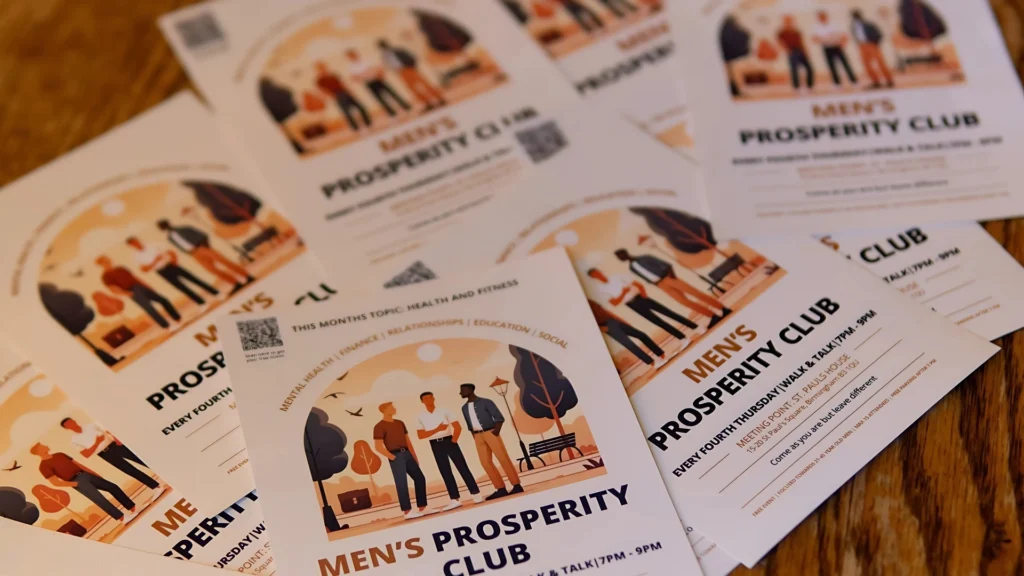
One of the fastest routes to emotional safety is finding a community that models it. The walk talk mens prosperity club event and the celebrating one year of walk and talk mens prosperity club articles show how structured, low-pressure social formats can help men practise vulnerability in a supported way.
The social game fun friends and your wellbeing reinforces that connection is not a luxury. It is a biological need, and communities that take that seriously create measurable improvements in how men experience their own emotional safety.
Mental health awareness 2025 healing together and mens mental health day raising awareness and support in birmingham uk both reflect the growing recognition that healing is a communal act, not just a personal one. The Mind UK organisation has consistently shown that peer support is one of the most effective interventions for sustained mental health improvement.
Why movember matters understanding its impact on mens health captures how even a month-long cultural conversation can shift how safe men feel discussing their health. Normalisation at scale matters.

Ready to Start Building It?
The most effective immediate action is identifying one relationship or environment in your life where emotional safety feels low, and choosing one behaviour to change this week. That might be listening without interrupting in your next difficult conversation. It might be admitting to a colleague that you do not have all the answers.
The guide to mens emotional wellness from struggle to strength offers a structured path forward. The power of self acceptance embrace your true self is part of that foundation too. You cannot offer others what you have not yet built within yourself.
For holiday periods, when emotional pressure often peaks, healthy tips for the holidays for men to stay fit and healthy, how to celebrate holidays with faith at the centre, and boost your mental wellbeing this holiday season all offer grounded, practical approaches to maintaining emotional health under pressure. Financial pressure during these periods is real too, so financial fitness money management tips for men in 2025 and personal money management tips to save more and spend wisely are worth bookmarking.
For ongoing articles and resources across all these areas, the blog is a solid starting point. The urgent mental health crisis ai vs human care solutions piece also raises important
Frequently Asked Questions
Q: What is the difference between emotional safety and emotional comfort?
Emotional safety is about freedom from judgement and threat; emotional comfort is about feeling good in the moment.
Comfort can sometimes lead you away from growth, whereas safety allows you to feel genuinely secure even during difficult conversations. A relationship can feel temporarily uncomfortable and still be emotionally safe.
Q: Can you have emotional safety in a relationship with someone who has hurt you before?
Yes, but only if there has been genuine repair, accountability, and changed behaviour over time.
Trust, once damaged, takes consistent evidence to rebuild. Safety cannot be declared; it has to be earned through repeated action. If patterns of harm continue without accountability, safety is not present regardless of what either party says.
Q: How do I know if I am emotionally safe in my workplace?
Signs include feeling able to speak up about problems, admit mistakes without fear of humiliation, and offer ideas without them being dismissed or ridiculed.
If you regularly edit yourself heavily before speaking, stay silent about real concerns, or feel anxious about your manager’s reactions to honest input, your environment likely lacks psychological safety. This is worth taking seriously as it has a direct impact on your long-term mental health.
Q: Is emotional safety something men need to work on differently than women?
Men often face additional barriers due to social conditioning, but the core needs for emotional safety are universal.
The difference tends to be in how those needs have been suppressed and what strategies are needed to begin accessing them. Men may benefit from structured, activity-based environments — like walking groups or sports clubs — as entry points into emotional connection rather than face-to-face, conversation-only settings.
Q: Can therapy help build emotional safety?
Yes, therapy is one of the most direct ways to experience and learn emotional safety in a structured environment.
A good therapeutic relationship models exactly what emotional safety feels like: consistent, non-judgemental, boundaried, and honest. This experience can then be transferred into other areas of life. If traditional therapy feels like too large a step, peer support groups and community initiatives are valid and often highly effective alternatives.