World Mental Health Day falls on 10 October, and this year the headlines scroll past us daily: families fleeing conflict, communities devastated by natural disasters, entire populations displaced by circumstances beyond their control. Yet behind each statistic lies a deeper crisis—one that often goes unseen until it’s too late. This World Mental Health Day, we’re confronting an uncomfortable truth: when catastrophe strikes, mental health support becomes not just important, but essential for survival itself.
This year’s theme, “Access to Services: Mental Health in Catastrophes and Emergencies,” arrives at a pivotal moment. Across the globe, humanitarian needs have surged to unprecedented levels, whilst funding for mental health and psychosocial support programmes faces devastating cuts. The contrast couldn’t be starker—or more urgent.
The Hidden Toll of Crisis
Picture yourself forced to leave everything behind within hours. Your home, your community, your sense of safety—all stripped away in an instant. Now imagine facing this trauma without any support, without anyone to talk to, without access to the care you desperately need.
For millions worldwide, this isn’t a thought experiment. It’s daily reality.
Research reveals a staggering statistic: one in three people caught in emergencies develops a mental health condition. Even more concerning, one in twenty faces severe conditions that require immediate intervention. These aren’t abstract figures on a spreadsheet. They represent children who can’t sleep through the night, parents paralysed by anxiety, individuals battling depression in refugee camps, and families struggling to hold themselves together when everything has fallen apart.
The situation grows even more complex for displaced populations. Migrants often encounter legal obstacles and social barriers that existed long before any crisis erupted. When disaster strikes, these existing challenges multiply exponentially. Health systems collapse. Services disappear. Support networks dissolve. The very infrastructure people rely upon crumbles beneath their feet.
Why Mental Health Support Saves Lives
Mental health and psychosocial support—commonly known as MHPSS—does far more than help people feel better. It fundamentally changes outcomes in emergency situations.
Consider what happens when someone experiences severe trauma without support. The psychological wounds fester. Depression deepens. Anxiety spirals. In the worst cases, people see no way forward at all. Suicide risks escalate dramatically. The person who might have recovered with proper intervention instead deteriorates, potentially beyond the point where help can reach them.
MHPSS intervenes at this critical juncture. It provides immediate support when people need it most. Professional counselling helps process traumatic experiences before they calcify into lasting damage. Group therapy creates connections that combat isolation. Community programmes rebuild the social fabric that disaster has torn apart.
Beyond preventing harm, MHPSS actively builds resilience. People learn coping strategies that serve them through extended crises. Families develop tools to support each other. Communities discover strength in collective healing. What begins as emergency intervention transforms into lasting capacity for recovery.
The evidence speaks clearly: early mental health support reduces long-term psychological damage, decreases suicide rates, and enables people to function under conditions of extreme stress. In humanitarian settings, MHPSS isn’t an optional extra—it’s a lifesaving intervention that belongs alongside food, water, and medical care.
The Funding Crisis Nobody’s Talking About
Here’s where the story takes a troubling turn. Just as demand for mental health support reaches record highs, funding has plummeted in the opposite direction.
Global MHPSS programmes currently face significant cuts that threaten access for over 500,000 people in 2025 alone. Let that sink in for a moment. Half a million individuals who desperately need support may simply go without it because the money has dried up.
The broader picture looks equally bleak. Worldwide, national health budgets allocate merely 2 per cent to mental health services. Two per cent. This paltry investment reveals how undervalued mental health remains, even as awareness grows and needs escalate.
These cuts don’t just affect individuals—they threaten to undo decades of progress. Communities that have built mental health infrastructure now watch it crumble. Programmes that have proven their effectiveness face closure. Healthcare workers trained to provide support find themselves without resources or positions. The hard-won gains of years vanish in a single budget cycle.
Bridging the Gap: Local Solutions Making a Difference
Whilst international funding falters, grassroots organisations continue fighting to fill the void. Across the UK, community-based mental health initiatives demonstrate what’s possible when people come together around shared struggles.
Take the Men’s Prosperity Club in Birmingham, for instance. This mental health support group recognises something often overlooked: men face unique barriers when seeking help. Traditional masculine expectations discourage vulnerability. Stigma runs particularly deep. Many men suffer in silence rather than reach out, even when they’re drowning.
The Men’s Prosperity Club creates a space where these barriers fall away. Men gather to share experiences, support one another, and develop practical coping strategies. The group doesn’t replicate clinical therapy—it offers something equally valuable. Peer support. Genuine connection. The realisation that struggling doesn’t make you weak; it makes you human.
This model matters because it can be replicated. Community-based support groups require relatively modest resources but deliver substantial impact. They reach people who might never walk into a therapist’s office. They provide ongoing support that extends far beyond standard treatment timeframes. Most importantly, they build lasting networks that strengthen entire communities.
Similar initiatives exist across the UK, each tailored to specific populations and needs. Some focus on refugees and asylum seekers. Others serve veterans, young people, or particular ethnic communities. Together, they form a patchwork of support that catches people falling through the cracks of formal systems.
What Crisis Mental Health Actually Looks Like
Understanding why MHPSS matters requires grasping what it actually involves. Emergency mental health support takes many forms, each designed for specific contexts and needs.
Psychological first aid provides immediate support in the aftermath of traumatic events. Trained responders help people process what’s happened, manage overwhelming emotions, and identify immediate safety needs. This initial intervention can prevent acute stress from developing into lasting conditions.
Crisis counselling offers short-term, focused support to help people cope with specific traumatic experiences. Rather than long-term therapy, it addresses immediate psychological needs and provides tools for managing crisis situations.
Community-based psychosocial support brings people together for collective healing. Support groups, community gatherings, and cultural activities help rebuild social connections and restore a sense of normality. These programmes recognise that recovery happens not just individually but collectively.
More intensive interventions serve those with severe mental health conditions. Psychiatric care, specialised therapy, and medication management become essential when people face serious depression, psychosis, or other acute conditions exacerbated by crisis circumstances.
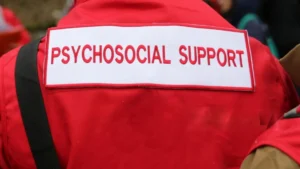
What unites these approaches is accessibility. Emergency mental health support meets people where they are—in camps, temporary housing, community centres, or via mobile clinics. It changes based on culture. People who don’t speak the same language can still use it. Normal healthcare settings might not be available or appropriate, as this idea acknowledges.
The Path Forward: Investment and Action
Acknowledging the crisis represents only the first step. Real change demands concrete action from governments, international organisations, and communities alike.
Sustained investment must become the foundation. Mental health funding cannot continue as an afterthought in national budgets. The 2 per cent allocation needs to increase substantially, with protected funding streams that survive political and economic fluctuations. Emergency response plans must include mental health support from the outset, not as something added later if resources permit.
Collaboration across sectors strengthens impact. Health services need to work alongside housing, education, and social services. International organisations must coordinate rather than duplicate efforts. Local communities require involvement in designing programmes that serve them, ensuring cultural appropriateness and genuine engagement.
Training and workforce development deserve attention too. More mental health professionals need training in crisis intervention. Community health workers require skills to provide basic psychological support. Even in resource-limited settings, task-sharing models can extend mental health support through trained non-specialists supervised by professionals.
Research and evidence-building must continue. We need better data on what works in different emergency contexts. Long-term outcome studies should track how early intervention affects recovery trajectories. This evidence base helps justify funding and refine approaches.
Our Collective Responsibility
World Mental Health Day 2025 arrives with a clear message: we cannot afford to ignore mental health in emergencies any longer. The human cost is too high. The evidence is too strong. The need is too urgent.
Every person deserves access to mental health support, regardless of where they live or what crisis they face. This isn’t idealistic thinking—it’s basic human rights. It’s a practical necessity. It’s the foundation upon which communities rebuild after a disaster.
The question isn’t whether we can afford to invest in emergency mental health support. It’s whether we can afford not to. Every person we don’t help today turns into a more difficult case tomorrow. Every community that doesn’t have resources has a harder time getting better. Cutting funding has effects that last a long time and aren’t felt right away.
Change begins with recognition. Recognise that your mental health is your health. Recognise that a crisis can have an effect on your mental health as well as your physical health. Remember that helping others can save lives.
Then act. Support local initiatives like the Men’s Prosperity Club. Advocate for increased mental health funding. Challenge the stigma that prevents people from seeking help. Speak up when you see mental health needs being dismissed or minimised.
Solidarity matters too. Stand with displaced populations. Listen to survivors. Amplify voices often ignored. Create spaces where vulnerability isn’t weakness but courage.
This World Mental Health Day, let’s commit to ensuring that all people affected by crises have access to the care they need. Not someday. Not when budgets allow. Now, when it matters most.
Because when a crisis strikes, mental health support isn’t a luxury. We’re just trying to stay alive. That’s honour. Hope is it. And everyone deserves all three.