

What is the Mental Health Continuum?
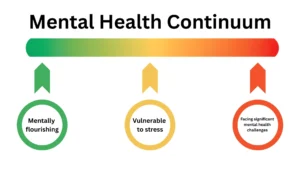
The mental health continuum represents a dynamic spectrum of wellbeing, with optimal mental health at one end and mental illness at the other. Rather than viewing mental health as simply “good” or “bad,” this framework acknowledges that we all move along this continuum throughout our lives, shifting positions based on life circumstances, challenges, and the support we receive.
What makes this model particularly empowering is its recognition that mental health isn’t static. Whether you’re currently thriving or struggling, your position on the continuum can change – and importantly, it can improve. This perspective is especially valuable for men, who often face unique barriers when it comes to discussing and addressing mental wellbeing.
Why the Mental Health Continuum Matters for Men
In the UK, men face significant mental health challenges that demand our attention and action. The statistics paint a sobering picture, yet they also highlight why understanding the mental health continuum is so crucial for improving outcomes.
Currently, three-quarters of suicides registered in the UK are among men, a pattern that has remained consistent since the mid-1990s. In 2023, England saw the highest rate of men taking their own lives since 1999, with 17.4 deaths per 100,000 men. Middle-aged men continue to have the highest suicide rate of any demographic group.
However, these numbers tell only part of the story. Research reveals that 77% of men have experienced symptoms of common mental health conditions such as anxiety, stress, or depression at some point in their lives. Yet remarkably, 40% of men have never spoken to anyone about their mental health. Among those who remain silent, 29% cite feeling “too embarrassed,” whilst 20% point to the negative stigma surrounding men’s mental health.
The good news? Understanding where you are on the mental health continuum – and recognising that movement along it is possible – provides a roadmap for improvement. Moreover, attitudes are changing, with increased awareness and a growing network of support specifically designed for men.
The Four Stages of the Mental Health Continuum
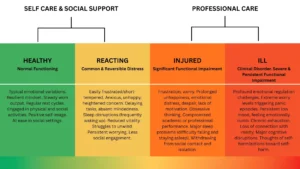
The mental health continuum breaks down into four distinct stages, making it easier to identify where you might currently be without overwhelming yourself with complex diagnostic criteria. Each stage serves as a marker, helping you understand your current state and what steps might benefit you most.
Healthy: Thriving in Daily Life
Men at this point generally feel satisfied and content with their lives. They’re emotionally balanced, stable, and successfully manage the normal stresses that life brings – whether that’s work pressure, relationship challenges, or unexpected setbacks.
At this stage, you’re able to contribute meaningfully to your community, maintain healthy relationships, and find purpose in your daily activities. Many men practise effective self-care routines, including regular exercise, maintaining consistent sleep patterns, engaging in hobbies, and fostering strong social connections.
This does not mean that life is easy or perfect. Rather, it means you have the emotional resources and coping strategies to navigate difficulties without becoming overwhelmed. You’re resilient, adaptable, and generally optimistic about the future.
Reacting: Responding to Life’s Pressures
Movement to the “reacting” stage often follows a significant life event – perhaps redundancy, relationship difficulties, bereavement, or financial stress. The Office for National Statistics found that men report lower levels of life satisfaction than women, and work (32%), finances (31%), and health concerns (23%) emerge as the biggest causes of mental health issues in men’s lives.
During this stage, you might notice distress or difficulty coping with specific situations, yet you remain capable of performing your daily functions. You’re still going to work, maintaining relationships, and managing responsibilities, though these activities may require more effort than usual.
The key characteristic of this stage is that it’s temporary and situation-specific. With appropriate support – whether that’s talking to mates, exercising regularly, or seeking professional guidance – most men successfully navigate back towards the “healthy” end of the continuum. Recognising you’re “reacting” isn’t a sign of weakness; it’s an honest acknowledgement that life has thrown you a curveball, and you’re working through it.
Injured: When Struggles Persist
The “injured” stage represents a more prolonged period of distress that doesn’t easily resolve through your typical coping strategies. At this point, difficulties begin impacting your ability to perform daily functions effectively. You might struggle with work performance, withdraw from social activities, or find that relationships become strained.
Young men aged 16 to 24 face particular vulnerabilities, with nearly a quarter (23.5%) describing their mental health as either bad or the worst it’s ever been in 2024. Meanwhile, for all men, the distress experienced at this stage signals that additional support beyond self-help techniques is likely needed.
Signs you might be at the “injured” stage include:
- Persistent low mood lasting several weeks
- Difficulty concentrating or making decisions
- Changes in sleep patterns or appetite
- Reduced interest in activities you once enjoyed
- Increasing isolation from friends and family
- Physical symptoms like headaches or fatigue without clear medical cause
Importantly, being at this stage doesn’t mean you’re “weak” or “failing.” Rather, it indicates that you’re facing challenges that require more structured support. This is precisely the point where reaching out to your GP, contacting a mental health service, or connecting with organisations like Men’s Prosperity Club can make a transformative difference.
Ill: Requiring Professional Support
At this end of the continuum, men experience significant and prolonged symptoms that substantially affect thoughts, behaviours, and daily functioning. You might struggle to cope with normal stressors, and the symptoms are severe enough to require professional intervention.
In England, approximately one in six people – including 15% of men – experience common mental health conditions. Additionally, men are nearly three times as likely as women to become dependent on alcohol and three times as likely to report frequent drug use, often as ways of coping with underlying mental health struggles.
At this stage, professional support becomes essential. This might include:
- Assessment and treatment from your GP or a mental health specialist
- Access to NHS Talking Therapies (though currently only 36% of referrals are for men, highlighting the need for more male engagement)
- Medication if appropriate
- Intensive therapeutic interventions
- Support from mental health trusts or crisis services
Crucially, even at this stage, movement back along the continuum towards health remains entirely possible. With appropriate treatment, support, and time, many men successfully recover and thrive. The mental health continuum reminds us that “ill” isn’t a permanent state – it’s a point on a journey that can lead back to wellness.
Breaking Through Barriers: Why Men Struggle to Seek Help
Understanding the mental health continuum is one thing; actually using it to improve your wellbeing is another. For many men, numerous barriers stand between recognising they need support and actually accessing it.
Traditional expectations around masculinity create significant obstacles. Men often grow up hearing messages about being strong, stoic, and self-reliant. Showing vulnerability or admitting struggle can feel like violating these deeply ingrained norms. Terms like “man up” or “tough it out” reinforce the idea that seeking help represents weakness rather than strength.
Yet here’s the empowering truth: reaching out for support actually demonstrates courage, not weakness. It shows you’re taking charge of your wellbeing, making proactive decisions about your health, and refusing to let struggles control your life.
The stigma surrounding mental health particularly affects men, with many fearing judgment from peers, family, or colleagues. However, attitudes are shifting rapidly. High-profile figures, including professional athletes and celebrities, increasingly speak openly about their mental health journeys, normalising these conversations and demonstrating that mental health challenges affect everyone.
Practical barriers also exist. Men are less likely to access psychological therapies than women, with only 36% of NHS Talking Therapies referrals being for men. This suggests that either services aren’t reaching men effectively, or men aren’t engaging with available support. Addressing these gaps requires both systemic changes in how services are delivered and individual willingness to seek help.
Moving Along the Continuum: Practical Steps for Men
Understanding where you are on the mental health continuum provides valuable self-awareness, but the real power comes from using this knowledge to move towards better wellbeing. Here are evidence-based strategies that work specifically well for men:
Build Your Support Network
Men often have smaller emotional support networks than women, but meaningful connections prove essential for mental wellbeing. This doesn’t require grand gestures – simply maintaining regular contact with mates, whether through sports, hobbies, or just meeting for a pint, creates valuable opportunities for connection and conversation.
Men’s support groups, like Men’s Prosperity Club, provide safe spaces where blokes can discuss challenges without judgment. These environments recognise that men might communicate differently about emotions, often finding it easier to talk “shoulder-to-shoulder” whilst engaged in activities rather than in formal face-to-face settings.
Stay Physically Active
Exercise consistently emerges as one of the most effective interventions for mental wellbeing. Physical activity releases endorphins, reduces stress hormones, improves sleep, and provides a sense of accomplishment. Whether it’s football, running, cycling, swimming, or simply walking, regular movement benefits both body and mind.
The NHS has recognised this connection, expanding social prescribing initiatives that connect people with community activities like exercise groups, sports clubs, and outdoor activities. These programmes offer mental health support in non-clinical settings that many men find more approachable and comfortable.
Establish Healthy Routines
Consistent sleep patterns, regular meals, and structured daily routines provide stability that supports mental wellbeing. When you’re “reacting” or “injured” on the continuum, maintaining these basics becomes even more crucial, though admittedly more challenging.
Learn to Recognise Your Warning Signs
Everyone has personal indicators that signal they’re moving towards the “reacting” or “injured” stages. These might include increased irritability, changes in sleep, reduced interest in usual activities, or increased alcohol consumption. Identifying your specific warning signs enables earlier intervention, preventing slides further along the continuum.
Seek Professional Support When Needed
Just as you wouldn’t hesitate to see a GP for a persistent physical health problem, mental health concerns deserve the same attention. Services available include:
- Your GP: Often the best first contact, who can assess your needs and refer you to appropriate services
- NHS Talking Therapies: Free evidence-based treatments for anxiety and depression, with self-referral options available
- Crisis Support: If experiencing suicidal thoughts, Samaritans provides 24/7 support (call free on 116 123)
- Specialised Services: Organisations like James’ Place offer free therapy specifically for men in suicidal crisis, with aims to see men within two working days
The government has committed to developing the UK’s first-ever Men’s Health Strategy, with mental health and suicide prevention as priority areas. This represents significant progress in recognising that men’s mental health requires targeted, gender-specific approaches.
The Path Forward: A Message of Hope
The mental health continuum teaches us several empowering truths. Firstly, mental health exists on a spectrum, and everyone moves along it throughout life. Secondly, your current position isn’t permanent – improvement is always possible with appropriate support. Thirdly, recognising where you are provides valuable insight into what steps might help most.
For men specifically, understanding the continuum challenges harmful stereotypes about strength and vulnerability. True strength lies not in suffering in silence, but in honestly acknowledging struggles and actively seeking solutions. It’s about being brave enough to have difficult conversations, resilient enough to ask for help, and determined enough to prioritise your wellbeing.
The statistics highlight real challenges: men die by suicide at three times the rate of women, face stigma that prevents help-seeking, and often lack appropriate support services. Yet these same statistics demonstrate why engagement with mental health support is so crucial. Every man who speaks openly about his struggles, who reaches out for support, or who simply checks in on a mate contributes to changing the narrative around men’s mental health.
Whether you’re currently “healthy,” “reacting,” “injured,” or “ill” on the mental health continuum, remember this: your position can improve. Support exists, recovery is possible, and you deserve to thrive. Organisations like Men’s Prosperity Club, NHS services, charities including Samaritans and PAPYRUS, and an expanding network of men’s mental health initiatives stand ready to support your journey along the continuum towards better wellbeing.
Mental health, like physical health, requires attention, care, and sometimes professional treatment. There is no shame in having problems, no weakness in asking for help, and no judgement in putting your health first. The continuum shows us that mental health is a journey, not a destination – and that journey, with the right support, leads towards a healthier, more fulfilling life.
If you’re struggling with your mental health, take that first step today. Talk to a trusted friend, contact your GP, reach out to Men’s Prosperity Club, or call Samaritans on 116 123. Your wellbeing matters, your life has value, and support is available. You can make good changes right now, no matter where you are on the mental health continuum, and you don’t have to do them by yourself.