
Financial pressure is one of the biggest sources of stress for men
across the UK, and having a clear set of saving money tips can genuinely
change how you feel day to day. Whether you are living paycheque to
paycheque or simply want to build a stronger financial cushion, small
consistent changes add up faster than most people expect.
Key Takeaways
- Automating your savings removes the temptation to spend before you
save, making the habit effortless - Cutting fixed costs like subscriptions and energy tariffs often
saves more than reducing daily spending - Your mental relationship with money matters as much as the practical
steps you take - The 50/30/20 budget rule gives you a simple, flexible framework to
manage income at any level - Meal planning and batch cooking can realistically save a UK
household between £50 and £150 per month - Community support, including groups like Men’s Prosperity Club, can
help you stay accountable to your financial goals
Why Financial Stress Hits Men Hard
Money worries do not stay in your bank account. They follow you to bed,
affect your concentration at work, and put real strain on your
relationships. According to the Money and Mental Health Policy
Institute, people in problem
debt are three times more likely to have experienced a mental health
problem. For men specifically, who are statistically less likely to seek
support, that pressure can quietly build into something much heavier.
This is not just about numbers on a spreadsheet. Financial stress chips
away at your confidence, your sleep, and your sense of purpose. The team
behind financial fitness money management tips for
men
at Men’s Prosperity Club understands that managing money is as much a
mindset challenge as it is a practical one.
The good news is that financial wellbeing is absolutely something you
can build, regardless of where you are starting from. The following
strategies are practical, proven, and tailored to the realities of life
in the UK right now.
Build a Budget That You Will Actually Stick To
The word “budget” puts a lot of men off because it sounds restrictive.
Think of it differently: a budget is simply a plan for your money before
the month starts, rather than a post-mortem of where it all went.
The 50/30/20 Rule Explained
One of the most reliable frameworks for budgeting is the 50/30/20 rule:
| Category | Percentage of Take-Home Pay | What It Covers |
|---|---|---|
| Needs | 50% | Rent/mortgage, food, utilities, transport |
| Wants | 30% | Eating out, subscriptions, hobbies |
| Savings & Debt | 20% | Emergency fund, pensions, debt repayment |
If your rent alone is eating 50% of your income, that is a signal to
look at other areas more aggressively, such as subscriptions or
discretionary spending. The framework is flexible, not fixed, but it
gives you a starting reference point.
Tools like the Money Helper budget planner from
MoneyHelper,
which is backed by the UK government, can help you map this out in under
20 minutes.
Automate Your Savings First
One of the simplest and most effective saving money tips is to pay
yourself first. Set up a standing order to move a fixed amount into a
separate savings account on payday, before you have a chance to spend
it. Even £50 a month becomes £600 by the end of the year, plus interest
if you choose a good account.
The best easy-access savings rates can be found by comparing providers
on Which? savings account
comparison. Look for
accounts above 4.5% AER at the time of writing.
Cut the Costs You Have Forgotten About
Most people overpay on at least three or four regular outgoings simply
because they have never reviewed them. This section is where many men
find their quickest wins.
Subscriptions and Direct Debits
Go through your bank statement and highlight every recurring payment.
Research from Lloyds Bank reported by the
BBC suggests the average UK adult
has over £50 per month in forgotten subscriptions. Streaming services,
gym memberships you rarely use, cloud storage plans, and app
subscriptions all add up.
Cancel anything you have not used in the last 30 days. You can always
re-subscribe if you genuinely miss it.
Energy Bills and Household Costs
The UK energy market has been particularly volatile since 2022. Always
check whether you are on your supplier’s standard variable tariff, which
is typically the most expensive option. Use a comparison site like
Uswitch energy comparison to
check your options regularly, especially as fixed-rate deals become more
competitive.
Simple household habits also make a real difference:
- Lowering your thermostat by 1°C can reduce your heating bill by
around 10%, according to the Energy Saving Trust - Switching to LED bulbs throughout your home costs very little
upfront but cuts lighting costs significantly - Washing clothes at 30°C instead of 60°C can save around £52 a year
for the average household

Food and Grocery Savings That Actually Work
Food is one of the biggest variable expenses in any household, and also
one of the areas where you have the most control.
Meal Planning and Batch Cooking
Planning your meals for the week before you shop eliminates impulse
buying and food waste. The NHS Eat Well
guidance recommends building
meals around protein sources like eggs, pulses, and cheaper cuts of
meat, all of which keep costs down while supporting good nutrition.
Batch cooking on a Sunday and portioning meals into the freezer means
you are far less likely to order a takeaway mid-week when you are tired.
The average UK takeaway order now costs between £15 and £25. Cutting
just two takeaways a month saves you up to £600 a year.
Supermarket Strategies
- Shop with a list and eat before you go, impulse purchases rise
significantly on an empty stomach - Compare unit prices rather than pack prices, supermarket own-brand
products are often 30-50% cheaper than branded equivalents - Use supermarket loyalty apps and cashback platforms like TopCashback
to reclaim money on everyday purchases - Check the reduced section for near-dated items and freeze what you
will not use immediately
The Mental Side of Managing Money
Here is something that is rarely talked about in mainstream financial
advice: your emotional relationship with money is just as important as
the practical steps you take. Men who struggle with anxiety, low mood,
or stress often find that their spending habits reflect how they are
feeling rather than what they actually need.
Retail therapy is real. Spending to feel better in the short term,
whether on gadgets, takeaways, or nights out, can quietly sabotage your
financial progress. Research cited by the Mental Health
Foundation consistently shows a
bidirectional link between poor mental health and financial difficulty.
This is why communities like Men’s Prosperity Club take a whole-person
approach to prosperity. The MPC
blog regularly explores how
mindset, community, and wellbeing intersect with practical life
challenges including finances. It is also worth reading about the
sexual link between health and mental well
being
to understand how financial stress can affect other areas of your life
in ways you might not immediately connect.

Staying mentally sharp also helps you make better financial decisions.
Reading about brain exercises for better focus and memory in
men
can give you practical tools to stay clear-headed under pressure, which
absolutely applies to how you manage your finances.
Build an Emergency Fund Before Anything Else
Before you think about investing or aggressively paying down debt, your
first financial priority should be an emergency fund. The standard
recommendation is three to six months of essential living expenses kept
in an easy-access account.
Why does this matter so much? Without an emergency buffer, any
unexpected cost, a car repair, a boiler breakdown, a period out of work,
forces you into debt. That debt then costs you more in interest, making
it harder to save going forward. The cycle is one of the most common
traps men in the UK fall into.
Start small if you need to. Even £500 in an emergency fund provides a
meaningful cushion compared to nothing. The MoneyHelper emergency fund
guide
explains how to build this up step by step.
Make the Most of Free UK Benefits and Schemes
Many men in the UK are leaving money on the table by not using schemes
they are already entitled to.
- Workplace pension contributions: If your employer matches
contributions, not maxing this out is effectively turning down free
money - ISA allowance: You can save up to £20,000 per tax year in an
Individual Savings Account completely free of tax on interest or
gains - Council Tax discounts: Single-person households receive 25% off;
some low-income households qualify for full relief - Free NHS services: Dental check-ups, eye tests, and
prescriptions may be free depending on your income or qualifying
conditions
Things to Know
- The UK’s Household Support Fund, administered through local
councils, can provide emergency financial help. Check your local
council’s website to see what is available in your area. - Martin Lewis of MoneySavingExpert recommends always checking your
credit report before applying for any financial product, as errors
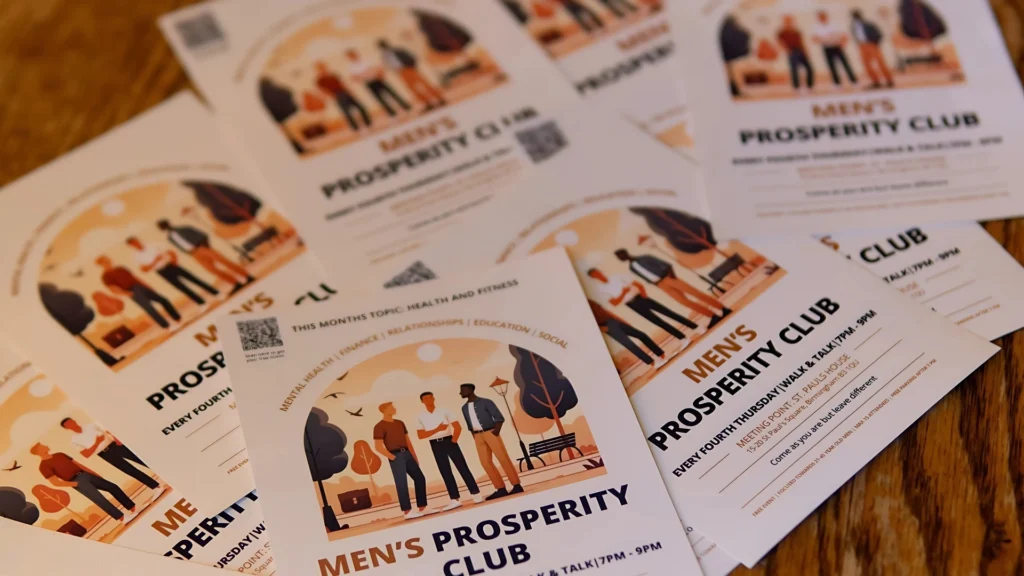
are more common than people realise. - Men’s Prosperity Club events, including walk-and-talk sessions, are
free to attend, making them an accessible starting point if
financial pressure is affecting your mental health. - Understanding events like mens mental health day raising awareness
and support in birmingham
uk
reminds us that taking care of your mind is directly connected to
your ability to manage practical challenges like money. - National campaigns like why movember matters understanding its
impact on mens
health
highlight the importance of men seeking support before challenges
become crises. - The state pension age in the UK is currently 66 and rising. Planning
your retirement savings early, even in small amounts, makes a
dramatic difference over time thanks to compound interest.

Take Control of Your Financial Future With Men’s Prosperity Club
Money stress does not have to be something you carry alone. At Men’s
Prosperity Club, based in Birmingham, we create a judgement-free space
where men can talk openly about the real pressures of life, including
financial challenges, without fear of being dismissed or judged. Our
walk-and-talk sessions, peer support groups, and community discussions
are all completely free.
If you are ready to take a step toward better financial wellbeing and
stronger mental health, come along to one of our sessions. Get in touch
today through the Men’s Prosperity Club website or visit one of our
Birmingham community events to find out how we can support you on your
journey.
Frequently Asked Questions
Q: How much should I realistically save each month in the UK?
There is no universal figure, but a commonly used starting target is
10-20% of your take-home pay.
Financial experts generally suggest that even saving £50 to £100 per
month is a significant starting point if your income is limited. The key
is consistency over time. Once saving becomes automatic, you can
gradually increase the amount as your income grows or your expenses
reduce.
Q: What is the fastest way to cut my monthly outgoings without
changing my lifestyle dramatically?
Reviewing and cancelling unused subscriptions, switching energy
tariffs, and negotiating your broadband or mobile contract are typically
the fastest wins.
Many people find £50 to £150 per month in forgotten or overpriced
recurring costs without making any visible changes to their lifestyle.
Start with a 20-minute audit of your bank statements and look for
anything you do not actively use or value.
Q: How do I start saving when I am already struggling financially?
Start with the smallest possible amount, even £1 per day, and automate
it so it happens without requiring a conscious decision each month.
The habit of saving matters more than the amount in the early stages.
Use free resources like the MoneyHelper website or community support
groups to help you build a clearer picture of your finances and identify
realistic places to cut back.
Q: Is it better to pay off debt or build savings first?
For most people, paying off high-interest debt first is the
mathematically better choice, but having a small emergency fund in place
before doing so prevents the cycle of debt recurring.
A common approach recommended by UK financial advisers is to build a
£500 to £1,000 emergency buffer first, then direct additional funds
toward clearing high-interest debt, then build longer-term savings once
debt is under control.
Q: Can improving my mental health actually help me manage money
better?
Yes, significantly. Stress, anxiety, and low mood directly affect
decision-making, impulse control, and financial motivation.
Men who address their mental wellbeing tend to make more consistent,
considered financial decisions. Peer support, community connection, and
open conversations about life challenges, all of which Men’s Prosperity
Club offers freely in Birmingham, can create the stability that makes
better financial habits possible.
The Bottom Line on Saving Money Tips
Saving money tips are most effective when you treat them as part of a
wider commitment to your own wellbeing, not just as financial tactics.
The practical steps here, budgeting, cutting costs, building an
emergency fund, and using the schemes available to you, will genuinely
move the needle on your finances. But doing them consistently requires
the kind of mental clarity and resilience that comes from looking after
yourself properly.
If money stress is weighing on you, reach out to Men’s Prosperity Club
and take advantage of the free community support available in
Birmingham. Your financial future, and your overall wellbeing, is worth
investing in.