
Saving money does not have to mean living on beans and cutting every pleasure from your life. With the right habits, tools and mindset, most people in the UK can build meaningful savings without feeling like they are constantly going without.
Key Takeaways
- Tracking your spending is the single most important first step before any budgeting method will work effectively.
- The 50/30/20 rule is a practical starting framework for splitting income between needs, wants and savings.
- Automating your savings removes the willpower problem entirely and builds your pot without you thinking about it.
- Financial stress has a direct impact on mental health and addressing both together produces better long-term outcomes.
- Small, consistent changes to daily habits compound into significant savings over months and years.
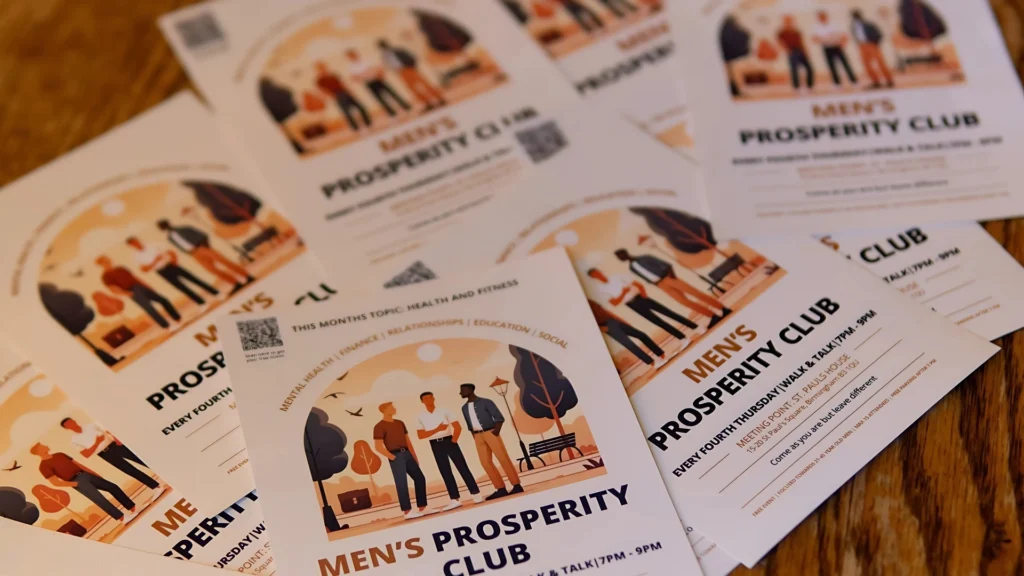
- Free community support, like Men’s Prosperity Club in Birmingham, can help you tackle the mindset side of money alongside the practical steps.
Why Most People Struggle to Save and What Actually Gets in the Way
Before you look at spreadsheets and budgeting apps, it helps to understand why saving is genuinely difficult for most people. It is rarely about a lack of effort. According to the Office for National Statistics, millions of households across the UK are spending more than they earn each month, with the cost of living squeeze since 2022 making the gap between income and outgoings wider than at any point in recent decades.
The reasons people struggle tend to fall into a few clear categories:
- No clear picture of where money goes. Most people underestimate their monthly spending by a significant margin.
- Emotional spending. Stress, boredom, loneliness and low mood all trigger spending behaviour that bypasses rational decision-making.
- A chaotic relationship with money. If money was a source of tension growing up, those patterns often carry into adulthood without being examined.
- No system. Motivation alone never sustains saving. Systems do.
The mental health angle is more significant than most financial articles acknowledge. Financial stress is one of the leading contributors to anxiety and depression in men across the UK and the connection between your financial wellbeing and your emotional state runs both ways. The financial fitness money management tips for men resource from Men’s Prosperity Club covers this connection in useful detail and it is worth reading alongside anything purely practical.
The Budgeting Methods That Work Best
There is no single budgeting method that suits everyone, but there are a few proven frameworks that most people in the UK can adapt to their situation.
The 50/30/20 Rule
This is the most widely used starting point. You split your take-home pay into three categories:
| Category | Percentage | What It Covers |
|---|---|---|
| Needs | 50% | Rent/mortgage, bills, food, transport |
| Wants | 30% | Eating out, subscriptions, hobbies |
| Savings/Debt | 20% | ISA contributions, emergency fund, debt repayment |
For someone earning the UK median salary of around £34,000 after tax (approximately £2,400 take-home per month), the 20% savings target would be around £480 per month. That is achievable for many, though it requires honest categorisation of needs versus wants.
Zero-Based Budgeting
Every pound gets assigned a job at the start of the month. Income minus all assigned categories equals zero. This method works particularly well for people who want complete control and find themselves surprised by their bank balance at month-end. Apps like YNAB (You Need a Budget) are popular for this, though the free version of MoneyHelper from the UK government at moneyhelper.org.uk is a strong starting point with no cost attached.
The Pay Yourself First Method
Before any bill is paid or any spending happens, a set amount is moved directly into a savings account on payday. This removes the temptation to spend what you intended to save. Setting up an automatic standing order for the day after your salary lands is the practical way to do this.
Practical Steps to Cut Costs Without Making Life Miserable
Once you have a budgeting framework in place, it is time to look at where the actual savings opportunities sit.
Energy and Household Bills
The energy price cap in the UK, overseen by Ofgem, has fluctuated significantly in recent years. Using a comparison site like Uswitch to check whether you are on the best available tariff takes around ten minutes and can save hundreds of pounds annually. If you are on a default tariff, there is a near-certain chance you are overpaying.
- Switch to a smart meter to track real-time consumption.
- Reduce your boiler flow temperature to around 60°C (a change that can cut heating costs by up to 8% according to the Energy Saving Trust).
- Check your council tax band via the Valuation Office Agency as around 400,000 UK homes are estimated to be in the wrong band.
Subscriptions and Direct Debits
Most people are paying for at least one service they no longer use. Go through your bank statements for the last three months and highlight every recurring payment. Cancel anything that does not serve you regularly. Even cutting three unused subscriptions at an average of £9.99 each saves nearly £360 a year.
Grocery Shopping
The Which? supermarket price comparison tool is one of the most useful free resources available. Switching some of your weekly shop to own-brand alternatives, using loyalty schemes (Tesco Clubcard, Sainsbury’s Nectar) and planning meals in advance are three changes that can collectively cut a household food bill by 20-30%.

Building an Emergency Fund Before Anything Else
Before you focus on longer-term savings goals like a Stocks and Shares ISA or a pension top-up, build a cash buffer. Most financial advisers in the UK recommend three to six months of essential expenses held in an easy-access savings account.
With interest rates at their highest point in over a decade, easy-access accounts from providers like Marcus, Chip, or Chase UK are currently offering rates well above 4% AER. Checking the MoneySavingExpert savings best-buys table regularly means you will never sit in a low-rate account without realising it.
An emergency fund removes the need to go into debt every time something unexpected happens, which is one of the most damaging cycles for long-term financial health. It also reduces background financial anxiety significantly, which brings us back to the mental health dimension.
The Money and Mental Health Connection Men Often Miss
Money stress does not just affect your bank account. It affects your sleep, your relationships, your ability to focus at work and your overall sense of wellbeing. The connection is bidirectional: poor mental health makes it harder to manage money and financial pressure worsens mental health.
Reading about the sexual link between health and mental well being puts some of this in context, as physical health, sexual wellbeing and emotional stability are all interconnected in ways that practical financial guides rarely discuss. Keeping your mental health in good shape is, in a real sense, part of how to save money in the long run because it protects your ability to make good decisions consistently.
Equally, practices that sharpen mental clarity help. The content on brain exercises for better focus and memory in men is relevant here because financial decision-making is a cognitive task and anything that improves your focus and recall helps you stay on top of your budget without it feeling like a chore.

Things to Know
- Your pension is part of how to save money. Contributing enough to get your full employer match is free money. Check your workplace pension contribution levels now.
- The Lifetime ISA (LISA) gives you a 25% government bonus on savings up to £4,000 a year if you are saving for a first home or retirement and are under 40. Many eligible people do not use it.
- Debt repayment order matters. Pay off the highest-interest debt first (usually credit cards) before putting extra into savings. The maths almost always favours this.
- Cashback cards used responsibly can earn you back 0.5-2% on everything you spend, but only if you clear the balance in full each month.
- Talking about money reduces shame around it. Men in particular tend to carry financial stress silently. Peer conversations in a safe environment like Men’s Prosperity Club can shift your relationship with money in ways a spreadsheet never will.
- Your income ceiling matters as much as your spending floor. Saving is only one half of the equation. Looking at skills development, career progression, or side income is equally valid.
Community, Brotherhood and Financial Wellbeing
Men’s Prosperity Club in Birmingham understands that financial wellbeing does not exist in isolation. The community tackles money as one of several interconnected aspects of a man’s life, alongside mental health, relationships, fitness and faith. Events like mens mental health day raising awareness and support in birmingham uk show that these conversations are happening in real, tangible ways at a community level, which creates the kind of accountability and support that makes personal change sustainable.
The annual why movember matters understanding its impact on mens health campaign is another reminder that financial and emotional health are treated as equally valid areas for men to openly discuss, not just physical symptoms. The MPC blog regularly publishes content across all these themes, making it a useful resource to return to throughout the year.

Join Men’s Prosperity Club and Work on Your Financial Wellbeing With the Support of a Community
Saving money is a lot harder when you are doing it in isolation, carrying stress you have never spoken about, or running on a mindset shaped by past financial anxiety. Men’s Prosperity Club in Birmingham offers free peer support, community discussions and a genuinely judgement-free space where money, mental health and personal growth are all on the table. If you are ready to build a stronger relationship with your finances and your overall wellbeing, this is the community that can walk alongside you. Find Men’s Prosperity Club in Birmingham and take the first step towards financial and emotional clarity today.
Frequently Asked Questions
Q: What is the fastest way to start saving money in the UK with a low income?
The fastest starting point is tracking every pound you spend for 30 days using a free app like Monzo or your bank’s built-in spending analysis tool.
Once you see where your money actually goes, you will almost certainly find categories where cuts are painless. Even on a low income, reducing food waste, switching energy tariffs and cutting unused subscriptions can free up £50-£100 a month.
Q: How much should I have in an emergency fund before I start investing?
Most UK financial planners recommend three months of essential expenses as a minimum before directing money into any investment product.
For someone whose monthly essentials (rent, bills, food, transport) come to £1,200, that means building a £3,600 cash buffer in an easy-access account first. Once that is in place, a Stocks and Shares ISA or Lifetime ISA becomes the sensible next step.
Q: Is a Cash ISA or a Stocks and Shares ISA better for savings in 2026?
It depends on your time horizon. For money you might need within five years, a Cash ISA is lower risk; for anything longer, a Stocks and Shares ISA historically outperforms over a ten-year-plus period.
The annual ISA allowance in the UK is £20,000 per tax year and all growth is tax-free. MoneySavingExpert’s ISA guide is the best free resource for comparing current rates and options.
Q: How does financial stress affect mental health and what can I do about it?
Financial stress activates the same stress response as any other perceived threat, raising cortisol levels and impairing decision-making over time.
The practical fix involves addressing both sides simultaneously: building better financial habits to reduce the objective pressure and finding peer support to reduce the emotional weight. Community spaces like Men’s Prosperity Club in Birmingham offer exactly that combination at no cost.
Q: What are the best free tools available in the UK to help manage money?
The MoneyHelper service at moneyhelper.org.uk, provided by the Money and Pensions Service, is the most comprehensive free financial guidance tool available to UK residents.
It covers budgeting, debt, pensions and savings with calculators and guidance tailored to UK law and products. Monzo, Starling Bank and Chase UK also offer built-in spending breakdowns that many people find more immediately useful than a separate app.
The Bottom Line on How to Save Money in the UK
Understanding how to save money comes down to three things working together: an honest picture of your current spending, a simple system that removes the need for daily willpower and a mindset that sees saving as something you do for your future self rather than something you are doing to punish your present self. The practical steps are well established. The hard part, for most people, is consistency over time.
Start with one change this week, whether that is reviewing your direct debits, opening a dedicated savings account, or simply downloading your bank’s app and looking at where your money has gone in the last month. Progress over perfection is the approach that actually compounds into real results.