

Build Lean Muscle, Burn Fat, and Feel Stronger Without the Extremes
If you’ve ever felt stuck, working hard in the gym but not seeing the changes you hoped for. Chances are your nutrition isn’t quite keeping up with your ambitions. The good news? You don’t need a complicated diet, expensive supplements, or an iron will to transform your body. What you need is a clear, balanced, and realistic plan that works with your lifestyle, not against it.
A well-structured 7 day meal plan for muscle gain and fat loss gives you exactly that: a practical framework for fuelling your body, supporting recovery, and making sustainable progress. This isn’t about perfection. It’s about building consistent habits that help you feel stronger, leaner, and more energised, day after day.
What Is a 7 Day Meal Plan for Muscle Gain and Fat Loss?
A 7 day meal plan for muscle gain and fat loss is a structured weekly eating guide designed to help your body do two things simultaneously: build lean muscle tissue and reduce stored body fat. This process is often called body recomposition, and while it requires patience, it is absolutely achievable with the right nutritional strategy.
Rather than cutting calories dramatically or eliminating entire food groups, a balanced meal plan focuses on:
- Eating enough protein to support muscle repair and growth
- Consuming quality carbohydrates for sustained energy
- Including healthy fats to support hormones and overall health
- Managing overall calorie intake to encourage gradual fat loss
- Timing meals to fuel workouts and aid recovery
The beauty of a structured plan is that it removes the daily guesswork. When you know what you’re eating and why, you’re far less likely to reach for something that doesn’t serve your goals.
How Nutrition Affects Muscle Growth and Fat Burning
Your body is constantly making decisions about where to direct energy. Nutrition is the single most powerful lever you can pull to influence those decisions.
When you eat enough protein, your body has the raw materials it needs, including amino acids, to repair muscle fibres broken down during exercise. Without adequate protein, even the most intense training programme will yield limited results.
When you manage your calorie intake, you create the conditions for fat loss. To lose body fat, you need to consume slightly fewer calories than you expend. However, the key word is slightly. Severe calorie restriction causes muscle loss, slows your metabolism, and leaves you exhausted, the opposite of what you want.
When you choose quality carbohydrates, you maintain energy levels for training, support hormonal balance, and prevent the fatigue that so often derails people’s best intentions. And when you include healthy fats, you support testosterone production, joint health and the absorption of fat-soluble vitamins.
Nutrition and exercise are a team. Neither works as well without the other.
Balancing Protein, Carbohydrates, and Healthy Fats
Getting the right balance of macronutrients is central to any 7 day meal plan for muscle gain and fat loss. Here’s a simple framework to work from:
Protein (the foundation): Aim for roughly 1.6–2.2g of protein per kilogram of bodyweight daily. Good sources include chicken breast, turkey, eggs, Greek yoghurt, cottage cheese, salmon, tuna, lentils, tofu, and whey protein.
Carbohydrates (your energy currency): Focus on complex, slow-releasing carbs like oats, sweet potatoes, brown rice, quinoa, whole grain bread and fruit. These provide sustained energy without the blood sugar spikes and crashes that come with processed alternatives.
Healthy fats (essential, not optional): Avocado, olive oil, nuts, seeds, and oily fish like salmon and mackerel all provide essential fatty acids that support recovery, brain function, and hormonal health.
A rough macronutrient split that works well for body recomposition is 40% carbohydrates, 30% protein, and 30% fat, though this can be adjusted based on your individual goals, activity levels, and personal preferences.
Why Calorie Control Matters (Without Going to Extremes)
Calories matter, but they aren’t the whole story. What matters just as much is the quality of those calories and how consistently you hit your targets.
For most people pursuing muscle gain and fat loss simultaneously, a modest calorie deficit of 200–400 calories per day is sufficient to encourage fat loss without sacrificing muscle. Pair this with adequate protein and regular resistance training, and your body learns to hold onto muscle while burning through fat stores.
The danger of aggressive calorie cutting is well documented. When you drastically reduce food intake, your body enters a state of stress. Cortisol rises, muscle is broken down for energy, metabolism slows, and mood plummets. That is not transformation, that is deprivation.
Think of calorie control as dialling in precision, not punishment.
Foods That Support Muscle Gain and Fat Loss
The following foods are nutritional workhorses, packed with protein, micronutrients, and energy-sustaining compounds that support body recomposition:
- Chicken breast and turkey: lean, high-protein, versatile
- Eggs and egg whites: complete protein with healthy fats
- Salmon and oily fish: protein plus omega-3 fatty acids for recovery
- Greek yoghurt and cottage cheese: slow-digesting casein protein, great before bed
- Lentils, chickpeas, and black beans: plant-based protein with fibre
- Oats: complex carbs that keep you full and energised
- Sweet potatoes: rich in complex carbs, vitamins, and antioxidants
- Leafy greens and vegetables: low calorie, high in micronutrients and fibre
- Berries: antioxidant-rich and naturally sweet
- Avocado and olive oil: heart-healthy fats that support hormonal health
- Nuts and seeds: healthy fats, magnesium, and zinc for muscle function
These are not “diet foods”, they are genuinely delicious, satisfying options that support your goals without making you feel deprived.
The Role of Hydration and Recovery
Nutrition is not just about what you eat. It is also about how well you recover. And recovery depends heavily on two often-overlooked factors: hydration and sleep.
Water makes up around 75% of muscle tissue. Even mild dehydration can impair strength, endurance, and cognitive function. Aim for at least 2–3 litres of water per day, more if you exercise intensely or live in a warm climate.
Sleep is where the real magic happens. Growth hormone , the body’s primary muscle-building and fat-metabolising hormone, is released predominantly during deep sleep. Skimping on rest undermines every meal you eat and every rep you lift. Aim for 7–9 hours of quality sleep each night.
A Complete 7 Day Meal Plan for Muscle Gain and Fat Loss
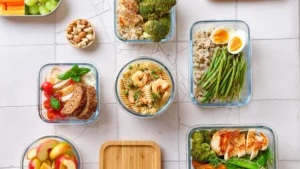
Below is a practical, balanced weekly plan. Adjust portion sizes based on your bodyweight, activity level, and calorie targets. Each day follows a structure of breakfast, mid-morning snack, lunch, afternoon snack, and dinner.
Day 1: Monday – Strong Start
Breakfast: Scrambled eggs (3 eggs) with spinach and whole grain toast + black coffee or green tea Snack: Greek yoghurt with a handful of blueberries and a sprinkle of chia seeds Lunch: Grilled chicken breast with brown rice and steamed broccoli Snack: A small handful of mixed nuts and an apple Dinner: Baked salmon with sweet potato mash and roasted asparagus
Day 2: Tuesday – Plant-Powered
Breakfast: Overnight oats with almond milk, banana, and a tablespoon of almond butter Snack: Cottage cheese with sliced cucumber and a rice cake Lunch: Lentil and vegetable soup with a slice of wholemeal bread Snack: Boiled eggs (2) with cherry tomatoes Dinner: Turkey stir-fry with mixed vegetables, sesame oil, and brown rice noodles
Day 3: Wednesday – Midweek Reset
Breakfast: Protein smoothie with whey protein, oat milk, frozen spinach, banana, and flaxseed Snack: Celery sticks with hummus Lunch: Tuna and avocado salad on wholegrain wraps with mixed leaves Snack: Greek yoghurt with a drizzle of honey Dinner: Grilled chicken thighs (skin-off) with roasted sweet potato wedges and a side salad
Day 4: Thursday – Recovery Focus
Breakfast: Poached eggs on rye toast with sliced avocado Snack: A banana and a small handful of walnuts Lunch: Chickpea and spinach curry with brown rice (batch-cook friendly) Snack: Cottage cheese with pineapple chunks Dinner: Baked cod with quinoa and roasted Mediterranean vegetables
Day 5: Friday – High Energy
Breakfast: Oat porridge with skimmed milk, mixed berries, and a tablespoon of pumpkin seeds Snack: A protein bar (check for low sugar) or boiled eggs with a piece of fruit Lunch: Grilled lean beef strips with wholegrain rice and stir-fried peppers and onions Snack: Apple slices with almond butter Dinner: Prawn and vegetable stir-fry with egg noodles and a light soy sauce glaze
Day 6: Saturday – Flexible and Social
Breakfast: Smashed avocado on sourdough toast with a poached egg and chilli flakes Snack: Smoothie with whey protein, oat milk, strawberries, and a teaspoon of flaxseed Lunch: Homemade turkey burgers (no bun or wholegrain bun) with sweet potato fries and salad Snack: Greek yoghurt with granola (small portion) Dinner: Salmon fillet with roasted new potatoes, green beans, and lemon butter
Day 7: Sunday – Prep and Recharge
Breakfast: Vegetable omelette (3 eggs) with mushrooms, peppers, and feta cheese Snack: A handful of mixed nuts and a pear Lunch: Chicken and avocado grain bowl with quinoa, roasted chickpeas, and a tahini drizzle Snack: Cottage cheese and sliced strawberries Dinner: Slow-cooked beef or turkey mince bolognese with courgette noodles or whole wheat pasta
Simple Meal Prep Tips for Busy Lifestyles
One of the biggest barriers to healthy eating is not motivation. It is time. Meal prepping removes the daily decision fatigue and makes it far easier to stay consistent. Try these practical tips:
Batch cook on Sundays. Prepare a large pot of brown rice, a batch of roasted vegetables, and two or three different protein sources. You’ll have the foundations for multiple meals ready to go.
Use freezer-friendly meals. Soups, stews, curries, and bolognese freeze beautifully. Cook double and freeze half for weeks when life gets hectic.
Pre-portion your snacks. Separate nuts, yoghurts, and fruit into individual portions at the start of the week so grabbing a healthy snack takes no thought at all.
Invest in good containers. Glass or BPA-free plastic containers make storing and transporting meals much easier. Seeing your meals ready to go is also a motivating visual cue.
How Portion Sizes Affect Your Results
Even the healthiest foods can slow progress if eaten in excessive quantities. Healthy fats like nuts and avocado are nutrient-dense but calorie-dense too. A simple way to manage portions without weighing every gram is to use your hand as a guide:
- Protein: Palm-sized portion per meal
- Carbohydrates: Cupped hand per meal
- Vegetables: Two fists per meal
- Healthy fats: Thumb-sized portion per meal
This is not about restriction, it is about awareness. Small, consistent adjustments to portion sizes make a significant difference over time.
Consistency Over Perfection: The Real Key to Success
Here’s something worth holding onto: no single meal, good or bad, will make or break your results. What matters is what you do consistently over weeks and months.
Following a 7 day meal plan for muscle gain and fat loss isn’t about eating perfectly every single day. It’s about building habits so solid that healthy choices become your default rather than your effort. Miss a meal? Have a takeaway? Enjoy a birthday cake? That’s life. Just return to your plan at the next meal without guilt or drama.
The people who achieve lasting body transformation are not the ones who are never tempted. They are the ones who keep showing up, even imperfectly.
Common Mistakes to Avoid
Knowing what not to do is just as valuable as knowing what to do. Watch out for these pitfalls:
Eating too little protein. Many people underestimate how much protein they need. Without enough, muscle growth stalls. Full stop..
Skipping meals to “save” calories. This leads to energy crashes, poor food choices later, and a slower metabolism over time.
Relying on cardio alone. Cardio burns calories, but resistance training is what builds and preserves muscle. You need both.
Following crash diets. Very low calorie diets strip muscle, wreck metabolism, and are near-impossible to sustain. The weight often returns, sometimes with more besides.
Neglecting sleep and recovery. Training without adequate rest is like trying to fill a bucket with a hole in the bottom. Recovery is where results are made.
Expecting rapid results. Healthy body recomposition is a slow, steady process. Most people see meaningful changes over 8–16 weeks of consistent effort.
Nutrition, Energy, Confidence, and Mental Wellbeing
What’s often underappreciated about clean, balanced eating is how profoundly it affects your mental and emotional health. When you fuel your body well, your energy improves. Your mood will improve as your energy improves. When your mood lifts, your confidence grows. And when your confidence grows, you’re more motivated to keep going.
This is the ripple effect of good nutrition, and it goes far beyond physical appearance. Reduced brain fog, better sleep quality, improved stress resilience, and a greater sense of self-efficacy are all natural by-products of a balanced, consistent diet.
A 7 day meal plan for muscle gain and fat loss isn’t just a fitness tool. It is an investment in your overall quality of life.
Practical Habits for Sustainable Progress
Beyond the meal plan itself, these daily habits will support your long-term success:
- Plan your meals at the start of each week to avoid last-minute poor choices
- Eat slowly and mindfully, giving your brain time to register fullness
- Limit ultra-processed foods rather than eliminating them entirely (balance, not restriction)
- Move your body daily, even on rest days , a walk counts
- Track your progress through photos, measurements, or energy levels , not just weight
- Seek support , whether that is a training partner, an online community, or a nutrition coach
Long-Term Healthy Eating Beats Quick Fixes, Every Time
It’s tempting to search for a shortcut. The fitness industry knows this, which is why it’s flooded with rapid-result promises, miracle supplements, and 30-day transformation claims. But the truth, backed by decades of research, is consistent: sustainable habits beat quick fixes every single time.
A 7 day meal plan for muscle gain and fat loss is most powerful not as a one-off experiment but as a repeatable framework you can refine and return to week after week. Swap meals you don’t enjoy. Adjust portions as your goals evolve. Celebrate progress without abandoning the plan when life gets imperfect.
Your body is built meal by meal, workout by workout, choice by choice. Start with one week. Make it count. Then do it again.
Remember: always consult a qualified healthcare professional or registered nutritionist before making significant changes to your diet, particularly if you have any underlying health conditions.