Every year, millions of people across the UK pause to reflect on something that touches every single one of us: our mental health. Mental Health Awareness Week is one of the most important moments in the national calendar, a time to start honest conversations, break down barriers, and remind one another that no one has to struggle alone.
But this year, the message goes further than awareness. This year, it’s about action.
What Is Mental Health Awareness Week?
Mental Health Awareness Week is an annual campaign run by the Mental Health Foundation, the UK’s leading charity for mental health research, policy, and education. It brings together communities, workplaces, schools, families and individuals to shine a light on mental health and challenge the stigma that still, far too often, prevents people from getting the help they need.
Since it began over two decades ago, Mental Health Awareness Week has grown into one of the biggest awareness events of its kind worldwide. Millions of people take part each year — sharing their stories, raising funds, wearing green ribbons and most importantly, starting conversations that might otherwise never happen.
When Is Mental Health Awareness Week 2026?
Mental Health Awareness Week 2026 takes place from 11–17 May 2026.
Mark it in your calendar. Tell your colleagues. Share it with your family. This is one week where the entire nation is encouraged to come together and make mental health a priority — not just something we talk about when things go wrong, but something we actively nurture, support, and protect every single day.
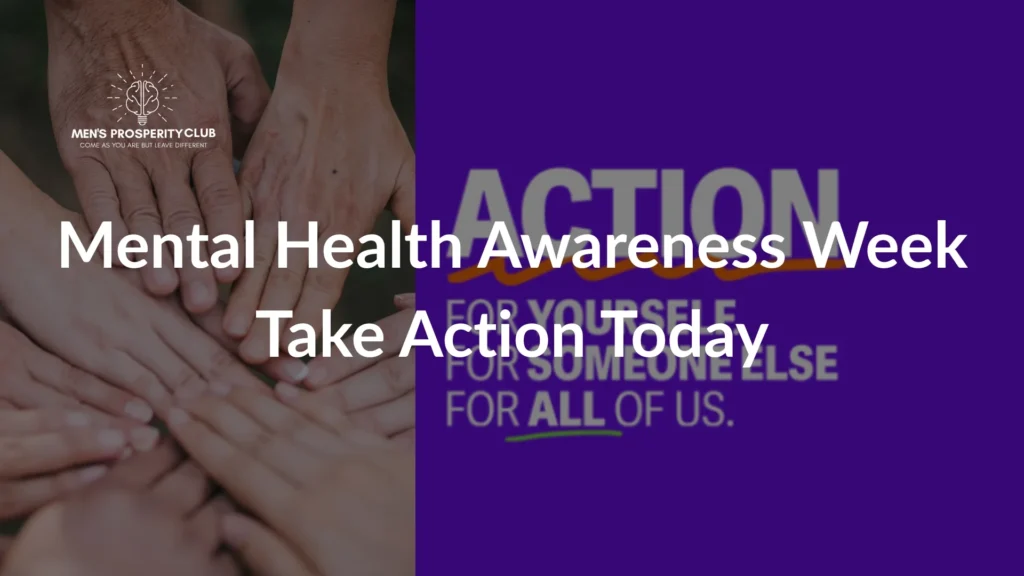
The 2026 Theme: Action
Each year, Mental Health Awareness Week focuses on a specific theme that reflects where we are as a society and what we most need to hear. For 2026, that theme is Action.
The Mental Health Foundation have chosen this word deliberately and powerfully. Because whilst awareness is absolutely vital — and we should never underestimate how far we’ve come in getting people talking about mental health, awareness alone isn’t enough. Real, lasting change happens when we move from understanding to doing.
As the Mental Health Foundation puts it: “Together, we’ve come a long way on mental health, but we can’t risk going backwards.”
That’s a sobering thought. In a world that still places enormous pressure on individuals, through financial stress, social media, job insecurity, loneliness and more, the mental health of the nation remains fragile. Many people are still suffering in silence. Too many are waiting months for support. And too many still feel that asking for help is somehow a sign of weakness.
Action is the antidote. And it can start with you, today.
Why Stigma Still Stands in the Way
Before we talk about what we can do, it’s worth acknowledging one of the biggest obstacles we still face: stigma.
Despite decades of progress, mental health stigma remains very real. Many people still worry that speaking openly about their mental health will lead to judgement — from colleagues, from friends, from family, even from strangers. They fear being seen as weak, unprofessional, or unable to cope.
This stigma is not just unkind. It’s genuinely dangerous. When people don’t feel safe enough to speak up, they don’t seek help. And when help is delayed, conditions worsen. Stigma costs lives.
Mental Health Awareness Week exists in part to chip away at that stigma — year by year, conversation by conversation. And one of the most powerful things you can do this week is to simply be someone who doesn’t flinch when mental health comes up. Be someone who listens without judging. Be the person who shares their own experience, if they feel able. Be the person who makes it a little easier for someone else to say, “Actually, I’m not okay.”
Taking Action for Yourself
The 2026 theme asks us to consider action at three different levels: for yourself, for someone else and for all of us. Let’s start with you.
Looking after your own mental health isn’t selfish — it’s essential. You cannot pour from an empty cup, and the better you understand and care for your own wellbeing, the more capacity you’ll have to show up for others too.
Here are some small but meaningful actions you can take for your own mental health this Mental Health Awareness Week:
Find your one thing. The Mental Health Foundation encourages everyone to identify one positive action that works for them. This might be going for a daily walk, journalling for ten minutes before bed, reducing time on social media, calling a friend you’ve been meaning to catch up with, or simply getting to bed an hour earlier. Resilience is built through small, consistent habits.
Talk to someone you trust. Saying out loud “I’ve been struggling a bit lately” is one of the bravest and most healing things a person can do. You do not need every answer. You do not have to reach a breaking point. Simply begin the conversation.
Seek professional support if you need it. If you’re experiencing persistent low mood, anxiety, or any other mental health difficulty, please reach out to your GP or a mental health professional. There is no shame in asking for help — it is, in fact, the strongest thing you can do.
Practise self-compassion. Many of us are far harder on ourselves than we’d ever be on a friend. Notice your inner voice this week. Is it kind? If not, challenge it. You deserve the same gentleness you’d offer to someone you love.
Taking Action for Someone Else
One of the most powerful things Mental Health Awareness Week reminds us is that we don’t just have a responsibility to ourselves — we have a responsibility to one another.
Think about the people in your life. Is there someone who seems quieter than usual? A colleague who’s been a little withdrawn? A friend who’s been cancelling plans? A family member who laughs things off but rarely talks about how they’re truly feeling?
This week, reach out. Not with a text that reads “You ok?” — but with something more intentional. Something like: “Hey, I’ve been thinking about you. How are you really doing? I’ve got time to chat if you need it.”
That word really matters. It signals that you’re not just going through the motions. You actually want to know.
Here are some ideas for helping a person who might be struggling:
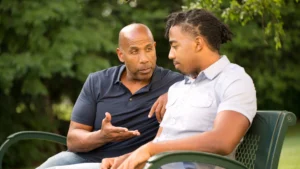
- Listen more than you speak. When someone shares how they’re feeling, resist the urge to immediately fix, advise, or compare. Just listen. Being truly heard is one of the most healing experiences there is.
- Check in consistently. Mental health struggles don’t resolve after one conversation. Keep showing up. A simple message or a coffee invite can mean the world.
- Encourage, don’t push. You can gently suggest that someone speak to a professional, but avoid issuing ultimatums or making them feel pressured. Trust and patience are key.
- Take care of yourself too. Supporting someone with their mental health can be emotionally demanding. Ensure that you have your own support network in place.
How Communities, Workplaces, Schools and Families Can Take Action
Mental health doesn’t exist in a vacuum. The environments we live, work, and learn in have a profound impact on how we feel. This is why Mental Health Awareness Week isn’t just for individuals — it’s a call to collective action.
In the workplace, leaders and managers have a unique opportunity and responsibility. Organisations that take mental health seriously — through open cultures, Employee Assistance Programmes, mental health days, and trained Mental Health First Aiders — see better performance, lower absence rates, and more loyal, engaged teams. This Mental Health Awareness Week, ask yourself: does your workplace feel psychologically safe? Can people speak honestly about their wellbeing without fear of consequences? If not, what can you do to change that?
In schools, early intervention is everything. Young people are facing unprecedented levels of anxiety, pressure, and uncertainty. Schools that embed mental health education into the curriculum, train teachers to spot signs of distress, and create genuine spaces for pupils to talk are giving their students an invaluable gift: the knowledge that their minds matter.
In families, the conversations we have (or don’t have) at home set the tone for how children and young people understand mental health for the rest of their lives. Normalising the language of emotions, modelling help-seeking behaviour, and making home a safe space to be vulnerable are some of the most powerful things families can do.
In communities, connection is a lifeline. Loneliness is one of the biggest risk factors for poor mental health, and community initiatives — from local mental health walks to volunteer befriending programmes — can make a profound difference. This Mental Health Awareness Week, look for ways to strengthen the social fabric around you. Host a community event. Organise a green ribbon campaign at your local school or sports club. Start a conversation.
Why Individual Action Matters — But Isn’t the Whole Story
Here’s something important to sit with: whilst every individual action counts — and please don’t underestimate the ripple effect of one person choosing to be kinder, more open, or more present — individual action alone will not fix a system that is, in many ways, failing people.
Mental health services across the UK are under enormous strain. Waiting times for support are, in many areas, unacceptably long. Funding is stretched. Preventative services are underfunded. And the structural factors that drive poor mental health — poverty, inequality, housing insecurity, unemployment — demand a political and social response, not just personal resilience.
This is why the 2026 theme of Action includes a call to those in power. Government, employers, commissioners, and public institutions all have a role to play in ensuring good mental health is possible for everyone — not just those lucky enough to have access to resources, support, and understanding around them.
During Mental Health Awareness Week, use your voice. Write to your MP. Support campaigns calling for better mental health funding. Share information on social media. Sign petitions. Attend local events. Amplify the stories of people with lived experience. Real change requires real pressure — and every voice adds to the chorus.

How to Get Involved in Mental Health Awareness Week 2026
There are so many ways to take part in Mental Health Awareness Week 2026. Here are just a few:
- Wear it Green — Show your support by wearing something green on Wear it Green Day.
- Download free resources — The Mental Health Foundation offers a wealth of free materials to help you get involved, whether at work, at school, or at home.
- Order a green ribbon — The green ribbon is the international symbol of mental health awareness. Wear one, share one.
- Sign up for email updates — Stay informed and inspired throughout the week.
- Become a workplace partner — If you’re a business leader or HR professional, explore how your organisation can formally commit to better mental health during the week and beyond.
- Simply start a conversation — This costs nothing and may mean everything.
Hope Is Not Passive
Mental Health Awareness Week is a moment of hope. It’s proof that, as a society, we care — that we’re willing to stop, look at one another, and say: your mind matters. You matter.
But hope, like mental health itself, requires tending. It requires action.
This 11–17 May 2026, let’s do more than raise awareness. Let’s raise the bar. Let’s take that one small step — for ourselves, for the people we love, for the colleagues beside us, and for the thousands of people we’ll never meet but whose lives could be changed by a system that truly puts mental health first.
The action starts with you. It starts right now.
For more information and to access free resources, visit the Mental Health Foundation at mentalhealth.org.uk.