

Relationship stress is something almost every man faces at some point, whether it comes from a partner, a family member or a close friend. The short answer is that it becomes far more manageable when you notice it early, say what is going on and stop trying to carry it quietly on your own. This guide explains where relationship stress comes from, how it shows up and what you can do about it, with practical steps you can start using this week. Pasted markdown
Key Takeaways
- Relationship stress is common and does not mean something is wrong with you or the relationship.
- It can show up in your mood, sleep, patience and the way you communicate.
- Money, work pressure, family demands and poor communication are frequent causes.
- Listening, boundaries and small daily habits make a real difference.
- Free peer support is available in Birmingham and the West Midlands.
What Relationship Stress Really Is
Relationship stress is the tension that builds when something in a close relationship feels strained, uncertain or out of balance. It might be a pattern of arguments, a distance that has crept in or a worry you have never found the words for. It is not limited to romantic partners. Relationships with parents, children, friends and colleagues can all cause it.
A little tension is normal because people with different needs and moods share their lives. It becomes a problem when it lingers, starts affecting your wellbeing or leaves you feeling on edge in your own home.
Expert tip: Stress rarely arrives from nowhere. It tends to build quietly through small unspoken frustrations, which is why catching it early is much easier than dealing with it once it has boiled over.
Common Causes of Relationship Stress
Every situation is different, but several causes come up again and again.
Money Worries
Bills, debt, job insecurity and differing attitudes to spending can put real pressure on a relationship. Many men feel a strong duty to provide, so financial strain can bring up guilt or shame that they rarely mention.
For men looking to build healthier habits around money, financial confidence and personal growth can also be part of the wider conversation around wellbeing and personal development.
Work Pressure and Time
Long hours, shift work and constant tiredness leave little energy for the people who matter most. You can be physically at home yet mentally elsewhere, and your partner or family may feel that distance.
Poor Communication
Assumptions, unspoken expectations and conversations that turn into arguments are among the biggest sources of strain. Many of us were never taught how to talk about feelings calmly, so we go quiet or react sharply instead.
Learning to express yourself openly can be an important part of improving your relationships. Men’s Prosperity Club’s approach to open expression and honest conversations provides another perspective on why men need spaces where they can speak without judgement.
Family and Life Changes
Becoming a parent, caring for a relative, moving house, grief or a change in work can all shift the balance in a relationship. Even positive changes bring stress because they alter routines and roles.
Differences in Needs
One person may need space while the other wants closeness. Neither is wrong, but without an honest conversation these differences can feel like rejection. If that feeling sounds familiar, dealing with rejection may help you think about how difficult emotions can affect the way you respond to challenging situations.
How Relationship Stress Shows Up in Men
Because many men are used to staying composed, stress can come out in less obvious ways. You may notice:
- Irritability or a short temper over small things
- Withdrawing, going quiet or spending more time away
- Trouble sleeping or constant tiredness
- Difficulty concentrating at work
- Relying more on unhealthy habits to switch off
- Feeling numb, flat or on edge
None of this makes you a bad partner, son, father or friend. These are signals that something needs attention, and noticing them is a good first step.
If stress is affecting your ability to think clearly, Mental Clarity for Men explores how emotional pressure, daily habits and connection can influence mental wellbeing.
Why Men Often Struggle to Talk About It
Many men grow up believing they should handle things alone and keep their emotions private. So when tension builds at home, the instinct is often to say nothing, stay busy or hope it passes.
The trouble is that unspoken stress rarely stays still. It can come out as sharp words, silence or distance, which the other person may read as not caring. Opening up does not mean unloading everything at once. It can start with a simple sentence such as, “I’ve been feeling under pressure and I want to talk about it.”
Exploring spirituality and emotional wellbeing for men can also help men reflect on their values, emotions and sense of connection.

Practical Ways to Manage Relationship Stress
You do not need to overhaul your life to feel better. Small, steady changes often work best.
1. Notice Your Triggers
Pay attention to when tension rises. Is it after work, around money conversations or when you are tired? Knowing your patterns helps you respond rather than react.
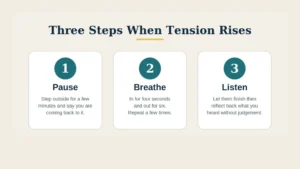
2. Pause Before You Respond
When you feel anger or frustration rising, take a few slow breaths or step outside for a few minutes. Let your partner know you are coming back to the conversation, so the pause does not feel like you are walking away.
3. Listen Without Judgement
Try listening to understand rather than to win. Let the other person finish, then reflect back what you heard. Even a simple “that sounds really hard” can lower the temperature in a tense moment.
4. Use “I” Statements
Saying “I feel overwhelmed when plans change at the last minute” lands very differently from “you never think about me”. It describes your experience without blame and keeps the conversation open.
5. Choose the Right Time
Raising something important when you are both tired, hungry or rushed rarely goes well. Agree a calmer moment, such as a walk or a weekend morning, and keep the conversation focused on one topic.
6. Set Healthy Boundaries
Boundaries are not walls. They are honest limits that protect your energy and the relationship, such as agreeing not to discuss difficult topics late at night or taking an hour each week for yourself.
7. Look After the Basics
Sleep, food, movement and time outdoors all affect how you handle pressure. A regular walk can clear your head and make hard conversations feel more manageable.
Mindful walking and mental wellbeing is another useful area to explore, particularly if you find that being outdoors helps you slow down and process your thoughts.
Common mistake: Waiting until you feel completely calm before talking about a problem. Most people never reach that point, so the conversation keeps being put off. Aim for calm enough to listen rather than perfectly relaxed.
Common Mistakes and Myths About Relationship Stress
Myth: Good relationships do not involve stress.
Every relationship has pressure at times. What matters is how you deal with it together.
Myth: Asking for help means you have failed.
Reaching out is a practical and responsible choice, and many couples and families find outside support valuable.
Mistake: Keeping score.
Tracking who did what and who was wrong tends to fuel resentment. Focus on the issue rather than the history.
Mistake: Using silence as a solution.
Going quiet may feel safer, but the other person is often left guessing. A short, honest explanation is kinder to both of you.
Mistake: Expecting one conversation to fix everything.
Real change usually comes from small, repeated efforts over time.
For a broader look at how men can develop resilience and make lasting changes, Personal Transformation in Men explores the role of mindset, support and consistent action.
Stress in Friendships and Family Relationships
Relationship stress is not only about partners. Friendships can strain when life gets busy, and family relationships often carry long histories that make conversations harder.
With friends, a short message such as “I’ve missed you, shall we catch up?” can reopen a connection. With family, it can help to focus on what you can control, such as how you respond, rather than trying to change another person.
Our Community at Men’s Prosperity Club explores how genuine connection, shared experiences and open conversations can help men feel understood and supported.
How Peer Support Can Help
Sometimes the most helpful thing is talking to other men who understand. At Men’s Prosperity Club, we offer free, judgement-free peer support in Birmingham where every voice matters and nobody has to have it all figured out.
Our walk-and-talk sessions are particularly helpful if relationships are weighing on your mind. Walking side by side takes the pressure off direct eye contact, so conversations often flow more easily. You can talk about what is happening at home or simply listen to others and realise you are not on your own.
You can learn more about Men’s Prosperity Club and its community support and the different ways men can connect, reflect and grow.

Building Hope and Resilience
Relationship problems can sometimes leave you feeling as though nothing will change. However, difficult periods do not necessarily define the future of a relationship or your wider wellbeing.
Building resilience means learning how to face difficult experiences without allowing them to completely determine how you see yourself or your future. Hope and Resilience in Men’s Mental Health explores how connection, honest conversations and purposeful action can help men develop greater emotional strength.
When to Reach Out for Extra Support
Relationship stress is common, but it should not become something you simply put up with. Consider speaking to someone if:
- The stress has lasted for weeks and is not easing
- Your sleep, appetite or mood has changed noticeably
- You are relying more heavily on unhealthy coping habits
- Arguments keep repeating without any resolution
- You feel stuck, hopeless or overwhelmed
Your GP is a good first step, and the NHS offers guidance through mental health services and Every Mind Matters. Relate offers relationship support and counselling across the UK. Mind, CALM and the Men’s Health Forum provide information for men. If money is adding to the pressure, MoneyHelper and Citizens Advice offer free, impartial guidance.
A note on safety: Stress is different from abuse. If you feel afraid of a partner or family member, or you are being controlled, threatened or hurt, support is available to men as well as women. If you are in immediate danger, call 999.
If things feel too heavy or you are having thoughts of harming yourself, please reach out straight away. You can call Samaritans free on 116 123 at any time or use NHS 111.
Frequently Asked Questions
What are the signs of relationship stress?
Common signs include irritability, withdrawing, poor sleep, trouble concentrating and arguments that feel repetitive. You may also feel on edge at home or notice that you avoid certain conversations.
How can I reduce relationship stress quickly?
Pause before responding, take slow breaths and step outside if you need a moment. Choosing a calmer time to talk and using “I” statements can also lower tension within a single conversation.
Is it normal to feel stressed in a relationship?
Yes. Pressure from money, work, family and life changes affects most relationships at some point. What matters is whether you are able to talk about it and respond with care.
How do I talk to my partner about stress without starting an argument?
Choose a calm moment, begin with how you feel rather than what they have done and listen to their response. Keeping the conversation to one topic helps it stay constructive.
Can talking to other men really help?
For many men, yes. Hearing similar experiences reduces the feeling of being alone and offers new perspectives. That is why peer support is such an important part of what we do.
Men’s Prosperity Club provides a space where men can have these conversations without judgement. Learn more about the MPC community
Conclusion: Take the Next Step
Relationship stress does not mean you are failing the people you care about. It usually means something matters to you and needs attention. Notice the signs, talk honestly and take small steps rather than waiting for a perfect moment.
Your relationships are also connected to your wider sense of purpose and wellbeing. For men exploring how faith, values and meaning can shape their lives, Finding Purpose in Life Through Faith offers another perspective.
If you are in Birmingham or the West Midlands and would like a supportive place to talk, you are welcome to join a free walk-and-talk or community session at Men’s Prosperity Club.
You can also explore Men’s Prosperity Club’s community partners and support network.
Real conversations. Real connections. Real growth.