

A successful marriage is built on consistent effort, mutual respect, and open communication, not on the absence of conflict. Research from the Office for National Statistics consistently shows that couples who actively invest in their relationship report higher satisfaction and lower divorce rates over time.
Key Takeaways
- Communication is the single most cited factor in long-term marital satisfaction.
- Financial transparency reduces one of the most common sources of couple conflict.
- Physical and emotional intimacy both require deliberate, ongoing attention.
- Shared values matter more than shared hobbies when it comes to long-term compatibility.
- Seeking professional support early, rather than as a last resort, strengthens relationships.
- Small, daily acts of appreciation have a measurable impact on relationship quality.
Why Communication Is the Foundation, Not a Soft Skill
Ask any relationship therapist what makes couples thrive, and the answer will almost always start with communication. Not just talking, but the quality of how you talk. There is a meaningful difference between venting frustration and actually expressing a need.
Psychologist John Gottman, whose work has been referenced extensively in The Guardian’s relationship coverage, identified what he called the “Four Horsemen” of relationship breakdown: criticism, contempt, defensiveness, and stonewalling. His research found that contempt, the act of treating your partner as inferior, was the single strongest predictor of divorce.
Practical communication habits that genuinely help:
- Use “I” statements rather than “you” accusations. (“I feel overlooked” rather than “You never listen.”)
- Set aside dedicated time to talk about the relationship, not just logistics.
- Ask clarifying questions before reacting. Assume confusion before assuming malice.
- Acknowledge your partner’s point before making your own.
These are not complicated techniques, but they require consistency. Couples who practise them even imperfectly tend to navigate conflict far better than those who rely on instinct alone.
The Role of Emotional and Physical Intimacy
Intimacy is not a single thing. It exists in layers, and when couples say they feel “disconnected,” it is often because one or both layers have been neglected over time.
Emotional intimacy is the feeling of being truly known by your partner. It develops through vulnerability, through sharing fears, hopes, and failures without fear of judgement. Physical intimacy, while not limited to sex, is equally important for most couples. The two are also deeply interconnected.
If you are interested in how physical health influences relationship dynamics, the article on the sexual link between health and mental well being offers a detailed look at how the two interact, particularly for men navigating stress and lifestyle changes.
The NHS guidance on relationships and mental health highlights that couples who maintain physical closeness, including non-sexual touch like holding hands or sitting close, report significantly better emotional connection.
A common mistake couples make is waiting to feel intimately connected before showing affection. The research suggests the opposite is more effective: the behaviour tends to precede the feeling, not follow it. Act affectionately consistently, and the emotional resonance tends to follow.
Financial Transparency: The Conversation Most Couples Avoid
Money is one of the most common sources of tension in relationships. A 2023 survey by Relate UK found that financial disagreements were cited in a significant proportion of couples seeking relationship counselling. The issue is rarely the money itself. It is the secrecy, mismatched values, or differing risk tolerances that create conflict.
Couples who handle finances well tend to share a few key habits:
| Habit | Why It Helps |
|---|---|
| Regular “money dates” (monthly check-ins) | Keeps both partners informed and involved |
| Agreed spending thresholds before major purchases | Prevents resentment over unilateral decisions |
| Separate “personal” budgets alongside joint accounts | Preserves individual autonomy |
| Shared savings goals | Creates a sense of working towards the same future |
| Open discussion of debt before marriage | Avoids shock discoveries later |
For men specifically, financial stress can carry its own particular weight. The financial fitness money management tips for men in 2025 resource covers practical strategies that translate well into a partnership context, particularly around budgeting and goal-setting.
Shared Values vs. Shared Interests: What Actually Binds Couples Together
It is easy to confuse compatibility with similarity. Many couples share hobbies, tastes, and routines, yet still struggle. Others seem to have little in common on the surface but sustain deeply satisfying relationships for decades.
The distinction usually comes down to values. Shared values include things like attitudes towards family, ambition, religion or spirituality, parenting approaches, and how you each define a good life. These are the load-bearing walls of a relationship. Shared interests, while enjoyable, are more like interior decoration.
Questions worth discussing before and during marriage:
- How do we each define success in life, not just financially?
- What role do family and community play for us individually?
- How do we approach risk, whether financial, professional, or personal?
- What does a healthy work-life balance look like to each of us?
- If we have children or already have them, what are our non-negotiable principles around raising them?
These conversations can feel heavy, but couples who have them regularly, rather than saving them for crises, tend to feel far more aligned over time.
Mental Wellbeing and Its Impact on Your Relationship
Your individual mental health does not exist in a vacuum. It ripples directly into your relationship. When one partner is struggling, the other feels it. When both partners are struggling simultaneously without acknowledgement, things can deteriorate quickly.
Men in the UK face particular challenges around mental health awareness and help-seeking. If you want to understand the broader context around this, the piece on mens mental health day raising awareness and support in birmingham uk explores how community-level awareness efforts are making a difference. Similarly, the annual why movember matters understanding its impact on mens health campaign has helped shift the conversation around male mental health significantly in recent years.
There is also compelling evidence that cognitive sharpness supports relationship quality. When you are tired, mentally overwhelmed, or struggling to focus, your emotional regulation suffers and your communication degrades. The resource on brain exercises for better focus and memory in men is worth bookmarking if you find that stress is blunting your ability to be present with your partner.
Mind UK recommends regular self-care not as a luxury but as a direct investment in the health of your relationships. When you manage your own mental state well, you bring more patience, empathy, and resilience to your partnership.
Navigating Conflict Without Damage
Every couple argues. The question is never whether conflict will occur, it is how the two of you handle it when it does.
Research published by the BBC Science Focus has noted that couples who “fight fair” show markedly better long-term outcomes. Fighting fair involves:
- Sticking to the specific issue rather than bringing in unrelated grievances.
- Agreeing to take a break if the conversation becomes too heated to be productive.
- Returning to the conversation once both people have regulated their emotions.
- Avoiding character attacks (“you’re so selfish”) in favour of behavioural observations (“I felt ignored when that happened”).
- Ending conflict with some form of repair, whether an apology, a hug, or a shared laugh.
Some couples find it helpful to establish a “repair phrase,” a word or sentence that both partners agree signals the need for a pause without it feeling like defeat. This kind of intentional structuring of conflict might sound clinical, but in practice it prevents a lot of unnecessary escalation.
Things to Know
- The UK divorce rate, while still significant, has declined in recent years. According to the ONS, the average marriage that ends in divorce lasts around 12 years, suggesting that erosion is often gradual rather than sudden.
- Couples counselling is most effective when sought early, not as a last resort. Many therapists note that couples wait an average of six years after problems begin before seeking help.
- Relationship satisfaction tends to dip after the arrival of children and again in the mid-life period. Knowing these pressure points exist helps couples prepare rather than panic.
- The “love languages” framework, popularised by Gary Chapman, has mixed scientific support, but the underlying principle (that people feel loved in different ways) has strong anecdotal and clinical backing.
- Small daily gestures, saying thank you, a brief text, a cup of tea without being asked, accumulate meaningful positive impact over months and years.
- Digital habits matter. Regular phone use during shared time together has been linked to lower relationship satisfaction in multiple UK studies.
Ready to Invest in Your Relationship?
The single most effective step you can take right now is to have one honest conversation you have been putting off. Not a confrontation, just a check-in. Ask your partner how they are really feeling about one area of your relationship, whether that is communication, finances, intimacy, or time together, and listen without preparing your response.
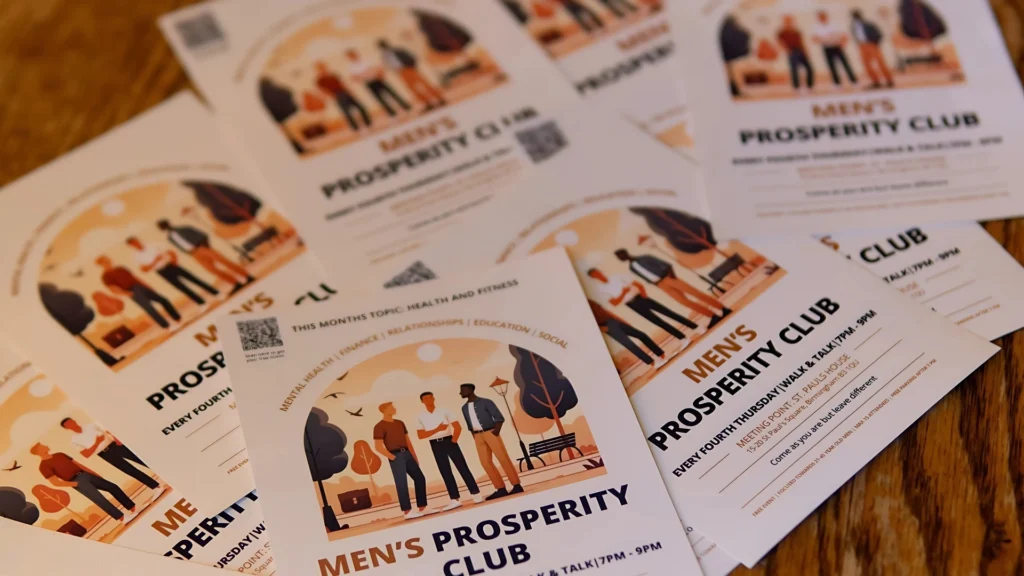
If you want to go further, the blog at Men’s Prosperity Club covers a broad range of topics that support both personal development and stronger relationships, from mental health to financial wellbeing and beyond.

Frequently Asked Questions
Q: Can a marriage be successful without having everything in common?
Absolutely, and in many cases, differences in personality actually complement each other well.
What matters far more than shared tastes or hobbies is alignment on core values such as family, finances, and life goals. Many long-lasting partnerships involve people who balance each other’s strengths and weaknesses rather than mirroring them.
Q: How often should couples check in on their relationship?
A regular monthly conversation about the relationship, separate from daily logistics, is widely recommended by therapists.
This does not need to be a formal sit-down. Even a 20-minute walk where you both talk honestly about how things feel can be sufficient. The key is consistency rather than waiting until something feels wrong.
Q: Is couples counselling a sign that a marriage is failing?
Not at all. Couples counselling is a tool for strengthening a relationship, not just rescuing one.
Many healthy couples use therapy proactively to improve communication, work through life transitions, or simply maintain clarity. Relate UK and similar organisations offer accessible services across the country.
Q: How does financial stress affect marriage?
Financial stress is one of the most common triggers for relationship conflict, primarily because of how it amplifies pre-existing tensions around control and trust.
Couples who discuss money openly and create shared financial goals tend to weather periods of financial difficulty far better than those who avoid the subject. Transparency is more important than the actual figures.
Q: What should couples do when they feel emotionally distant?
The most effective first step is to re-establish small daily rituals of connection rather than attempting a large, emotionally intense conversation.
Shared activities, consistent physical affection, and genuine curiosity about each other’s day all help rebuild closeness gradually. If the distance has persisted for months, speaking to a relationship therapist sooner rather than later is a sensible move.
The Bottom Line on What Makes a Successful Marriage
Understanding what makes a successful marriage is not about finding a formula and following it mechanically. It is about committing to ongoing attention, honesty, and effort, even on the days when it feels unnecessary or awkward. The couples who thrive long-term are not the ones who never struggle. They are the ones who keep choosing to work through the struggle together.
Start small. Have the conversation you have been avoiding. Learn something new about your partner this week. And when things feel particularly stuck, ask for help early rather than hoping they will improve on their own.