
Have you ever sat across from your partner and felt completely alone? You’re not the only one. According to recent data from the Mental Health Foundation UK, nearly 42% of British adults reported feeling emotionally disconnected from their partners in 2025, with men being particularly reluctant to address these feelings openly.
Emotional connection isn’t just a nice-to-have in relationships—it’s the lifeline that keeps love alive. Without it, even the most passionate relationships can feel like two strangers sharing the same space. But here’s the good news: emotional intimacy isn’t something you either have or don’t have. It’s something you create, nurture and grow stronger with time.
Let me walk you through eight powerful ways to deepen that connection, backed by real insights and practical steps you can start implementing today.
1. Practice Vulnerable Communication (Not Just Regular Talk)
There’s a massive difference between talking and truly communicating. You might discuss what’s for dinner, who’s picking up the kids, or weekend plans without ever touching the emotional core of your relationship.
Vulnerable communication means sharing what’s actually happening inside you—your fears, hopes, insecurities, and dreams. It means saying “I felt hurt when…” instead of “You always…” It means admitting “I’m struggling with this” rather than pretending everything’s fine.
Research from Relate UK in 2025 shows that couples who engage in emotionally vulnerable conversations at least three times per week report 67% higher relationship satisfaction. That’s not a coincidence—that’s connection in action.
Start small. Tonight, instead of asking “How was your day?”, try “What’s something that weighed on your mind today?” or “What made you feel proud today?” Notice how the conversation changes when you encourage sincere emotional sharing.

2. Create Rituals of Connection
Life gets busy. Between work pressures, family obligations, and the constant digital distractions, quality time together often falls to the bottom of the priority list. However, intentional connection rituals can anchor your relationship through the chaos.
These don’t need to be elaborate. According to relationship therapists across Birmingham and the wider UK, couples who maintain small daily rituals—a morning coffee together, a ten-minute check-in before bed, or a Sunday walk—build stronger emotional bonds than those who only connect during occasional date nights.
The key word here is intentional. Your ritual might be as simple as sitting together for fifteen minutes without phones, sharing your genuine highs and lows from the day. What matters is the consistency and the presence you bring to these moments.
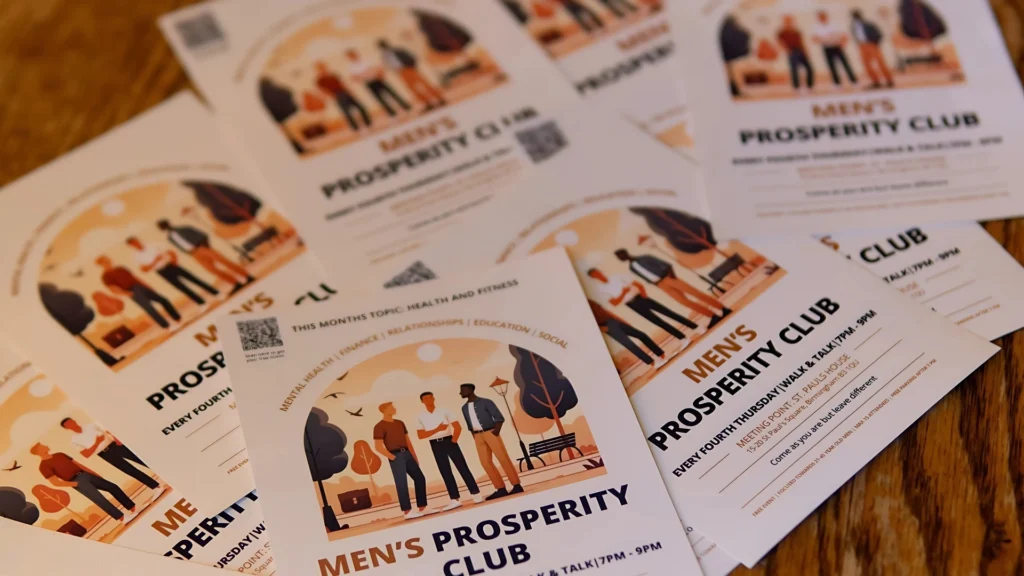
Think about what would work for your relationship. Perhaps it’s a weekly walk where you can talk freely (similar to the walk-and-talk approach used at Men’s Prosperity Club Birmingham). Maybe it’s cooking together every Sunday. Whatever you choose, protect that time fiercely.
3. Master the Art of Active Listening
Here’s something most people get wrong: they think listening means waiting for their turn to speak. Real listening—the kind that builds emotional connection—means being fully present with your partner’s experience.
Active listening involves putting aside your phone, turning toward your partner, making eye contact, and truly absorbing what they’re saying. It means asking follow-up questions that show you’re truly listening, like: ‘How did that make you feel?’ or ‘What do you need from me right now?
A 2025 study from the University of Birmingham found that partners who practiced active listening techniques reported feeling significantly more understood and valued in their relationships. Moreover, 78% of participants noted that feeling heard was more important than their partner having solutions to their problems.
Next time your partner shares something, resist the urge to immediately fix, advise, or relate it back to your own experience. Instead, simply listen. Reflect back what you’re hearing: “It sounds like you’re feeling overwhelmed by work pressures.” This simple validation creates profound emotional safety.
4. Share Your Inner World (Not Just Your Schedule)
Many relationships operate on logistics alone. We coordinate schedules, manage household tasks, and plan activities—all important, but none of it builds emotional intimacy.
Emotional connection deepens when you share what’s happening in your inner world. What are you thinking about? What’s exciting you? What’s keeping you awake at night? What dreams are you afraid to voice?
According to mental health professionals in the UK, men particularly struggle with this aspect of emotional connection. Traditional masculine conditioning often teaches men to handle things internally, to “be strong,” and to avoid appearing vulnerable. Yet this same conditioning creates profound loneliness and disconnection.
At Men’s Prosperity Club Birmingham, we’ve witnessed firsthand how transformative it is when men create spaces to express themselves openly and authentically. When vulnerability is embraced as strength rather than weakness, genuine connection becomes possible—both with ourselves and with our partners.
Make it a practice to share at least one internal thought or feeling with your partner daily. It might feel awkward initially, especially if you’re not used to it. That’s normal. Keep going.

5. Develop Empathy Through Perspective-Taking
Empathy isn’t just about feeling sorry for your partner—it’s about genuinely understanding their perspective, even when it differs from yours. This requires intentional effort, particularly during conflicts.
When disagreements arise, our instinct is to defend our position and prove we’re right. Instead, try pausing and asking yourself: ‘What might my partner be feeling right now? What needs or fears might be driving their reaction?”
NHS mental health data from 2025 indicates that relationship conflicts rarely stem from the surface issue being argued about. Instead, they’re usually about unmet emotional needs—feeling unheard, unappreciated, or disconnected. When you approach conflicts with empathy, you address the real issue beneath the argument.
Try saying, ‘Help me see things from your point of view’ during disagreements. This simple phrase shifts the dynamic from adversarial to collaborative. You’re no longer opponents but teammates trying to understand each other.
6. Touch, Hold and Be Physically Present
Physical touch isn’t just about sex—though that’s certainly part of intimacy. I’m talking about the small gestures: holding hands while walking, a hug that lasts more than two seconds, touching their arm while talking, or simply sitting close enough that your legs touch.
Research from the Touch Research Institute shows that non-sexual physical touch releases oxytocin, the bonding hormone that strengthens emotional connection. Yet in long-term relationships, these small touches often disappear as familiarity replaces intentionality.
Make a conscious effort to increase non-sexual physical touch in your relationship. A six-second kiss goodbye. A proper hug when reuniting after work. Sitting close on the sofa rather than on opposite ends. These small gestures accumulate into profound emotional closeness.
Physical presence matters too. Being in the same room while both scrolling phones isn’t quality time. Turn off devices. Face each other. Let your physical presence communicate: “You matter. This moment matters.”
7. Support Each Other’s Individual Growth
This might seem counterintuitive, but emotional connection actually strengthens when partners support each other’s individual development. Healthy relationships aren’t about merging into one person—they’re about two whole individuals choosing to share their lives.
Support your partner’s interests, even if they’re not the same as yours. Support their friendships. Celebrate their achievements. Create space for them to pursue personal growth. When your partner feels seen and supported as an individual, they bring more authenticity and vitality to the relationship.
This applies to mental health support too. If your partner—or you—would benefit from external support networks, encourage it. For men in Birmingham particularly, groups like Men’s Prosperity Club offer invaluable spaces for personal development and community connection. These external support systems don’t threaten your relationship; they strengthen it by helping each person become healthier and more whole.
Individual growth creates interesting, engaged partners who have more to bring to the relationship. Stagnation, by contrast, breeds resentment and disconnection.
8. Practice Consistent Appreciation and Gratitude
Here’s a sobering statistic: Relate UK’s 2025 survey found that 61% of people in long-term relationships couldn’t remember the last time their partner verbally expressed appreciation for them. We take each other for granted, assuming our partners know they’re valued without us needing to say it.
But emotional connection thrives on explicit appreciation. Saying “I’m grateful you handled that situation” or “I appreciate how patient you were today” creates positive emotional deposits in your relationship bank account. These deposits matter tremendously when conflicts inevitably arise.
Make it a daily practice to express specific gratitude for something your partner did, said, or simply is. Not generic praise, but specific acknowledgment: “Thank you for listening to me vent about work without trying to fix it—I really needed that” or “I love how playful you are with the kids; it lights up our home.”
When appreciation becomes habitual, it transforms the emotional atmosphere of your entire relationship. Your partner feels seen, valued, and motivated to keep showing up fully.

Moving Forward: Your Next Step
Building emotional connection isn’t a one-time event—it’s an ongoing practice. Some days will feel easier than others. There will be setbacks. That’s perfectly normal and just part of the journey.
The question isn’t whether you’ll be perfect at this. The question is: are you willing to show up and try? Are you ready to be vulnerable, even when it’s uncomfortable? Are you committed to creating the kind of relationship where both people feel truly seen, heard, and valued?
If you’re a man struggling with vulnerability or emotional expression—you’re not alone. Traditional masculine conditioning makes this work particularly challenging, but also particularly necessary. Your relationships, mental health and overall wellbeing depend on your ability to connect authentically.
Take the Next Step with Men’s Prosperity Club Birmingham
If you’re ready to develop stronger emotional connections—with your partner, with yourself, and with a supportive community—Men’s Prosperity Club Birmingham offers exactly what you need. Our free mental health support group provides a safe space where vulnerability is embraced as strength, not weakness.
Through our unique walk-and-talk sessions and horizontal leadership model, men are discovering that expressing themselves openly isn’t just possible—it’s transformative. We’re more than a support group; we’re a movement encouraging authentic male expression and genuine community connection.
Don’t face these challenges alone. Join us and discover what becomes possible when men support each other in personal growth and emotional authenticity.
Your relationship deserves your best self. Your partner deserves your authentic presence. And you deserve the deep connection that makes life meaningful.
The journey toward stronger emotional connection starts with a single step. Will you take it today?
Men’s Prosperity Club Birmingham welcomes all men seeking peer support, personal growth, and authentic connection. Visit us to learn more about our walk-and-talk sessions and join a community where your wellbeing matters.